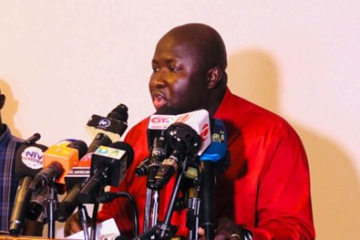
Addressing journalists, CGG Executive Director Alasana Sowe said excluding 16,17-year-olds from the electoral process has created a growing democratic gap in a country where more than half of the population is under 25.
“Further marginalisation of young people will only breed frustration, apathy and loss of trust in public institutions,” Sowe stated at the press conference.
According to the policy paper, Afrobarometer surveys show that nearly half of young Gambians believe the government is not doing enough to address their needs, while trust in key institutions remains low, with only 37 percent of youth trusting Parliament and 42 percent trusting the presidency.
CGG cited international evidence showing that early enfranchisement strengthens participation. In Austria, voter turnout among 16–17-year-olds is higher than among first-time voters aged 18–20, while Scotland’s 2014 referendum recorded a 75 percent turnout among 16–17-year-olds, exceeding the national average.
In The Gambia, Afrobarometer Round 10 (2024) indicates that more than 60 percent of young people are aware of their civic rights and responsibilities, though civic knowledge remains weaker in rural areas, highlighting the need for targeted civic education.
Rather than an immediate constitutional amendment, CGG recommended a voluntary pilot phase allowing 16 to17 year-olds to vote in local government elections as a first step. The organisation said this staged approach would allow institutions to build capacity before extending the reform to parliamentary elections.
The policy paper notes that Section 39 of the 1997 Constitution sets the voting age at 18, meaning any reduction would require a constitutional amendment backed by a two-thirds majority in the National Assembly and a national referendum. However, CGG argued that reforms to the Elections Act, enhanced civic education by the Independent Electoral Commission, and stronger youth representation in local governance could be implemented immediately.
CGG called on the National Assembly, the IEC, the Ministry of Justice, civil society organisations and development partners to work collectively to advance youth inclusion and strengthen democratic trust.
The organisation concluded that lowering the voting age is not merely an electoral reform but an investment in The Gambia’s democratic future, urging policymakers to act decisively to empower the next generation and consolidate democratic gains.