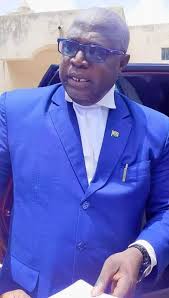
In his submission, Camara cited multiple sections of the constitution to support his position, stressing that the defence must be given adequate opportunity to prepare and respond to any evidence presented. He insisted that the principle of fair trial demands that all witness statements be disclosed in advance.
“My Lord, what appears to be presented as a summary is, in fact, not a summary. This witness summary is only two and a half lines long, and the statements contained within are not reported speech but rather assertions of fact made by the person who drafted them.”
“My Lord, it states that the witness was at the crime scene. That is not reported speech. It further claims that he escorted the deceased to the Brikama Health Centre. Again, that is not reported speech; it is a factual assertion. It also states that the witness will testify to all he knows about the case. These are not summaries but direct statements of fact.”
Camara added: “This is not a summary, My Lord. If you look at the statement, it is clear that no witness statement has been attached to this notice of additional witnesses. Therefore, the question arises: how will the defence know what the witness is going to say? My Lord, the substantial part of the witness’s evidence will strike the defence without warning, because the defence has had no prior knowledge of what he intends to say.”
He continued: “It is very likely to be incriminating and adverse to the accused person. The witness must make a statement, and that statement should be served on the defence prior to his testifying. Otherwise, his evidence becomes highly prejudicial. Not only would it take the defence by surprise, but it would also deprive the accused person of certain prosecutorial privileges and rights.”
Counsel further argued that the witness could be challenged on the content of his statement and rendered unreliable due to inconsistencies between his written statement and his evidence in chief.
He stressed that the defence would be denied the right to tender the witness’s prior written statement during proceedings, which would enable the court to compare and contrast the written statement with the oral testimony. Finally, he warned that the witness could deny anything he wished, or say anything he wanted, notwithstanding his oath, because there would be nothing before the court to contradict him.
Meanwhile, State Counsel Mballow cited numerous sections and sub‑sections in support of his argument, following Defence Counsel Camara’s objection to allowing the state witness, who was scheduled to testify today, to take the stand.
State Counsel submitted: “My Lord, the principle of pre‑trial disclosure is that the prosecution may, and in my view should, disclose all evidence in their possession and custody, whether or not they intend to tender it or rely upon it in their case.”
He continued: “My Lord, we are submitting that the notice of additional witnesses was filed on 13 October 2025, and it is clearly in conformity with the laws governing the conduct of trials before this Honourable Court.”
“My Lord, it is not the law that a witness who did not make a statement to the police cannot testify.” Mballow also cited other cases from within the region to support his argument.