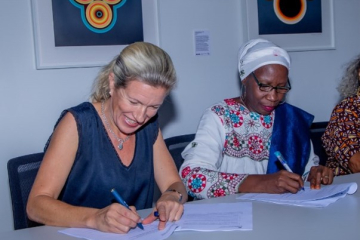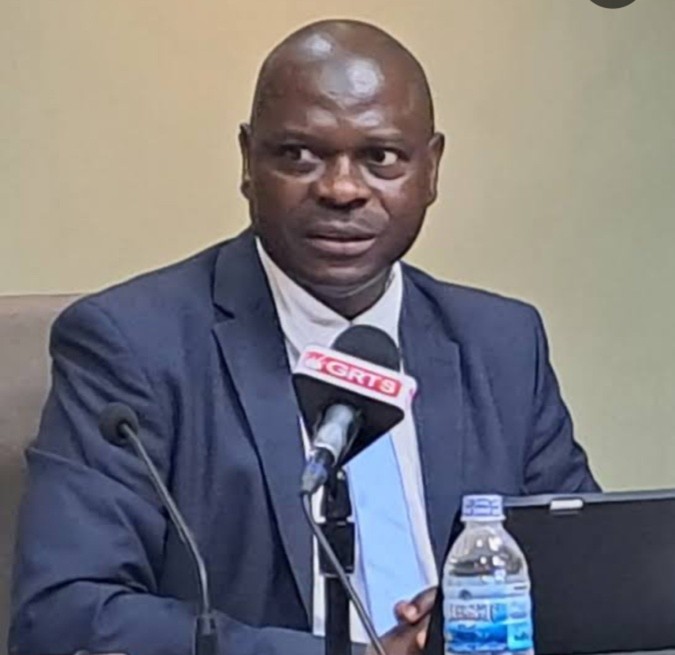
“To bridge that gap, the Ministry of Finance, the Central Bank, the IMF and the World Bank worked together to establish a direct lending facility from the Central Bank to the Ministry of Finance. A memorandum of agreement between the two institutions was signed and I promise it will be published on the Ministry’s website for everyone to see, in the interest of transparency.”
According to him, the arrears to Karpower have indeed been settled, but the liability has not disappeared. “The obligation has simply shifted,” Keita clarified. “Karpower has been paid, but now the receivable obligation is with government, owed to the Central Bank. When the World Bank’s budget support arrives, it will automatically settle that loan.”
He stressed that all government transactions with the Central Bank fall within strict rules either funded by revenue, or staying within the credit limits set for government borrowing. Anything outside those limits attracts market interest rates, as required by the Central Bank Act. All those details, he said, are clearly captured in the agreement.
Addressing critics who claim government paid Karpower yet reported arrears to the National Assembly, Keita said the explanation is straightforward. “The budget originally anticipated D20 million in World Bank support, but the Bank provided an additional D25 million specifically for clearing Karpower arrears. “When you receive more than expected, you must inform the approving authority, it’s about accountability,” he said.
He rubished rumours that the funds could have been diverted into private pockets. “Not a dalasi of government resources can be paid into anybody’s pocket,” Keita insisted. “There are layers of controls, and in this case, the money was already a loan. How can anyone pocket it when the Central Bank must be repaid?”
Even in the unlikely event the World Bank fails to disburse its support, he added, government would still be bound to repay the Central Bank in full with interest.
Keita also dismissed comparisons to past incidents involving funds deposited into private accounts at other institutions. Those situations, he said, were detected precisely because of the accountability mechanisms in place. “Receiving money from government is not a one-way street. You must account for every butut.”
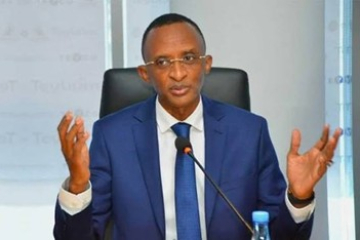
As the interview wrapped up, the minister reaffirmed the administration’s commitment to transparency. The full memorandum of agreement including the exact account where the World Bank funds will land will be shared publicly and made available to the media.
“What we are seeing now is enhanced donor and investor confidence in The Gambia. Donors are supporting us because of the way we are managing public finances.”