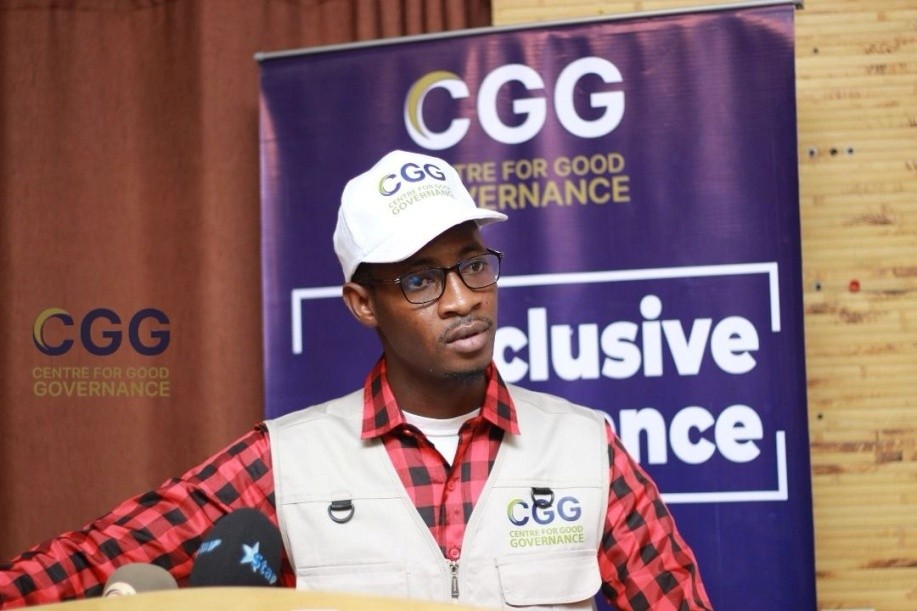
According to Sowe, CGG was born out of research that exposed persistent governance failures despite major national initiatives such as the Constitutional Review Commission (CRC), the Truth, Reconciliation and Reparations Commission (TRRC) and ongoing security-sector reforms. He noted that the repeated collapse of the draft constitutions in 2019, 2020, and 2024 highlights unresolved systemic weaknesses that continue to undermine progress.
CGG aims to promote integrity within public institutions, protect citizens’ rights with a special focus on persons with disabilities, strengthen early-warning mechanisms and expand meaningful youth participation in decision-making. Sowe stressed the urgency of disability-inclusive elections, noting that visually impaired voters and those using wheelchairs or crutches still face significant barriers at polling stations.
Speaking at the event, Marr Nyang, Founder and Executive Director of Gambia Participates, highlighted the indispensable role of accountability in democratic governance. “When officials commit wrongdoing and remain in office without consequences, institutions breed more corruption,” he warned. Nyang encouraged citizens to use available public data to demand transparency and urged CGG to build strong partnerships for improved public-finance oversight.
Lala Touray, Deputy Executive Director of the National Youth Service Scheme (NYSS), commended Sowe’s initiative and emphasised the need to empower young people. “If we fail to guide young people, we contribute to their disempowerment,” she said, calling on civil-society organisations to create safe and supportive environments for emerging leaders.
Human-rights advocate Madi Jobarteh, Executive Director of the Edward Francis Small Centre for Rights and Justice, described CGG’s formation as a pivotal development. He argued that while many organisations focus on service delivery, the deeper national challenges stem from weak and unaccountable state institutions. “You can invest everything in health and education,” he said, “but if government institutions are not accountable, people will still suffer.” Jobarteh welcomed CGG as a much-needed “moral and intellectual compass” in a period marked by fragile public confidence.
As The Gambia navigates another critical stage of constitutional and institutional reforms, CGG positions itself as an independent watchdog committed to civic education and systemic accountability, pushing the principles of transparency and good governance from the margins to the centre of public debate.