He said the National Land Policy 2026–2035 provides the framework for reforms including stronger land administration, digitisation of land records, land-use planning, tenure security and improved dispute resolution.
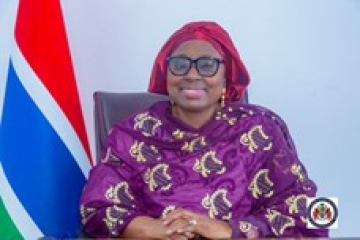
Nyillan Fye Frezer, General Manager of Global Properties, said the private sector continues to face delays, disputes, fragmentation and uncertainty in land administration, issues which can discourage investment and slow development.
“Digitising land records will reduce corruption, speed up transactions, and restore public trust,” she said, while welcoming plans for digitalisation, institutional coordination, environmental protection and equitable access to land.
She said predictable processes and transparent approvals would give businesses greater confidence to invest and plan responsibly.
“Our role is not only to build estates. It’s to build trust, to build communities, and to build confidence in the land market,” she said.
Dr Samba Sowe, Director of Planning, outlined some of the ministry’s ongoing reforms, saying implementation of the National Land Policy began in January 2026 following its launch by the President in December.
He said the ministry’s strategic plan has been completed and highlighted the development of a national land information system, which is expected to be completed and effectively used in 2027. Land records will also be digitised, while several land-related laws are undergoing review.
Dr Sowe also outlined plans for customary land registration, regional offices, institutional restructuring, capacity building and process reforms aimed at making land registration simpler, faster and more cost-effective.
Alongside the land policy committee, the ministry inaugurated a committee to organise the 2026 Mansa Mbengo gathering, a traditional meeting of Mansas or chiefs.
Chief Mustapha Dibba, representing the Paramount Chief of The Gambia, said the gathering dates back to the colonial era, continued during the First Republic and later became dormant before Minister Bah began efforts to revive it.
Minister Bah described the revival as a critical national assignment and an opportunity to showcase the country’s cultural heritage, traditional governance and national unity.
“We cannot afford to fail in getting this done,” he told the committee, urging government institutions, traditional leaders and security agencies to work together for a successful Mansa Mbengo 2026.