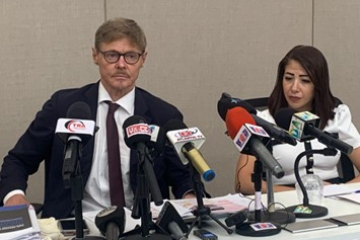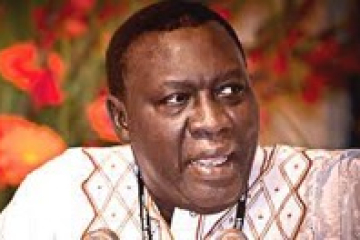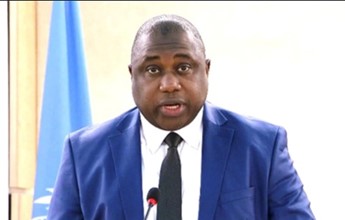
Speaking at the opening of the 87th Ordinary Session of the African Commission on Human and Peoples’ Rights in Banjul on Sunday, Justice Minister Jallow declared that the continent stands at a defining moment marked by conflict, democratic pressure, shrinking civic space, and growing inequality.
Addressing delegates, diplomats, human rights defenders, and representatives from across Africa, Hon. Jallow said hosting the Commission in Banjul carries deep symbolic and historical significance.
“There is something important about this city hosting this Commission,” he stated. “Banjul is not simply a geographical location. It is a statement of intent, a declaration made forty years ago that Africa would build its own architecture of justice and hold itself accountable to it.”
He stressed that the commitment made decades ago now requires more than ceremonial gatherings.
“That commitment deserves more than ceremony. It demands delivery,” he emphasised.
The Justice Minister painted a grim picture of the global and continental challenges threatening human rights protections, citing wars, political instability, attacks on civic freedoms, and the misuse of technology to silence dissent.
“Technology, which should empower, is being weaponised to surveil, silence, and manipulate,” he warned.
According to him, Africa continues to bear the heavy consequences of armed conflicts in Sudan, the eastern Democratic Republic of Congo, and the Sahel region, with millions displaced and the rule of law severely undermined.
He further highlighted the worsening vulnerabilities faced by women, children, persons with disabilities, indigenous communities, informal workers, and climate-displaced populations.
“We should say this plainly: our continent has real and serious problems,” he declared. “Acknowledging them honestly is not weakness. It is the beginning of credible leadership.”
Despite these difficulties, Hon. Jallow maintained that Africa possesses the moral and institutional strength to confront its challenges through homegrown principles and legal frameworks rooted in the continent’s own history and struggles.
He described the African Charter on Human and Peoples’ Rights as a uniquely African instrument born out of the continent’s determination to define dignity and justice on its own terms.
He also praised the principle of Ubuntu, describing it as one of the world’s most sophisticated ethical frameworks for collective human rights and shared humanity.
The Attorney General commended the African Commission and the African Court on Human and Peoples’ Rights for their contributions over the years, particularly in promoting accountability, justice, and protections for women and girls through instruments such as the Maputo Protocol.