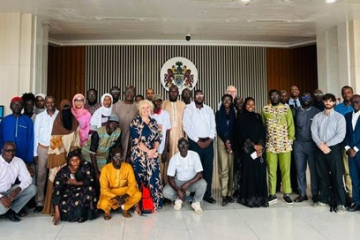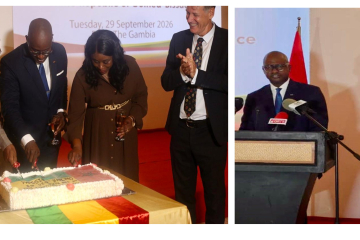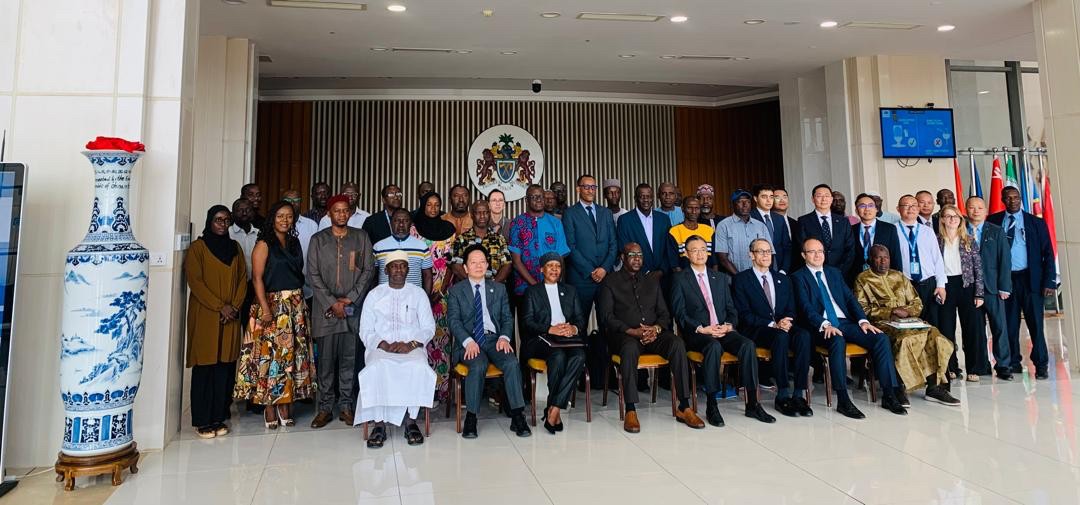
The Sustainable Rice and Millet Food Systems Transformation Project, funded through the FAO–China South–South Cooperation Trust Fund with an investment of about D110 million, was launched during an inception workshop attended by senior government officials, development partners and agricultural experts.
Speaking at the event, FAO Representative in The Gambia, Moshibudi Rampedi, described the project as a strategic partnership designed to strengthen the production, processing and marketing of two key staple crops.
She explained that rice remains the most consumed staple food in The Gambia, with an average annual consumption of 117 kilograms per person, which is significantly higher than the global average. Millet, she added, is the country’s second most important cereal crop, accounting for nearly 30 percent of total production, mostly cultivated by smallholder farmers for household consumption.
Rampedi noted that despite the importance of these crops, farmers continue to face major challenges including limited access to quality seeds, inadequate irrigation systems, outdated farming practices, poor post-harvest handling and weak market linkages.
“The project aims to address these challenges directly by strengthening production capacity, improving post-harvest technologies and expanding market access for rice and millet,” she said.
The initiative is structured around three key pillars: increasing production capacity, promoting improved processing and storage technologies to reduce post-harvest losses, and strengthening value chains and market systems.
Also speaking at the launch, Ye Anping, FAO Director of South-South and Triangular Cooperation, emphasised the importance of knowledge exchange among developing countries.
He explained that since 2009 China has contributed over 130 million US dollars to FAO to support South-South cooperation initiatives across the Global South, benefiting millions of farmers through agricultural technology transfer and capacity development.
The United Nations Resident Coordinator in The Gambia, Karl Frederick Paul, said the programme aligns with the country’s development priorities, particularly the Yiriwa National Development Plan, which places agriculture at the centre of economic recovery and food security.
He noted that The Gambia spends significant resources importing rice, a burden that affects both the national economy and household budgets.
“This programme responds directly to that challenge through improved crop breeding, mechanization, better post-harvest systems and expanded market access,” he stated.
According to him, the initiative is expected to benefit about 20,000 farmers directly, while more than 160,000 additional people in farming communities could gain indirectly through improved agricultural productivity and income opportunities.
Representing the People’s Republic of China, Ambassador Liu Jin highlighted the long-standing agricultural cooperation between the two countries, noting that agriculture remains the backbone of The Gambia’s economy with more than 70 percent of the population engaged in the sector.
He said China has supported agricultural development in The Gambia through technology transfer, machinery donations and capacity building programmes, including training opportunities for over 400 Gambian agricultural professionals.
China has also provided 116 sets of agricultural machinery and about 30 tons of hybrid rice seeds, helping strengthen national food production capacity.
For his part, Minister for Agriculture, Livestock and Food Security, Dr. Demba Sabally, said the project represents a critical step in addressing the country’s food security challenges.
He disclosed that The Gambia spends approximately 80 million US dollars annually importing over 200,000 metric tons of rice, while local production currently meets only about 20 percent of national demand.
“This is money leaving our economy that could instead be invested in irrigation systems, research, mechanization and empowering our farmers,” the minister said.
Dr. Sabally added that under the programme, a team of Chinese agricultural experts specialising in rice breeding, irrigation and mechanisation will be deployed to Sapu in the Central River Region South for two years to work directly with Gambian farmers, researchers and extension officers.
The experts will help build national capacity in rice production systems, storage, processing, irrigation techniques and seed multiplication.
The minister expressed the government’s appreciation to FAO and the People’s Republic of China for their continued support, describing the initiative as a significant milestone in the country’s efforts to strengthen agricultural productivity and achieve long-term food security.