
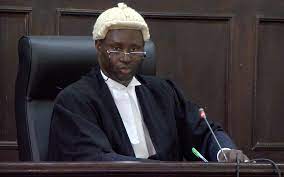
Delivering his judgment, Justice Jaiteh ruled that the prosecution failed to prove the charges of conspiracy and murder beyond reasonable doubt, as required by law. The accused persons had been standing trial on two counts conspiracy to commit a felony contrary to section 267 of the Criminal Code and murder contrary to section 187 of the Criminal Code.
The incident was alleged to have occurred on 14 August 2021 in Farafenni, North Bank Region.
The prosecution claimed that the accused persons agreed among themselves to tie and beat Sheriff Hydara in their compound, leading to his death. The accused spent more than five years in detention at Mile Two Central Prison before the judgment was delivered.
Justice Jaiteh noted that none of the prosecution witnesses testified to having directly witnessed the alleged assault.
One witness admitted he did not see any part of the incident, while a police officer involved in the investigation conceded that he did not observe the assault firsthand.
“The absence of any direct eyewitness who saw the accused persons physically assault the deceased is a critical flaw,” Justice Jaiteh stated, emphasizing that suspicion cannot substitute proof in criminal trials, particularly in cases carrying severe penalties.
The court also raised concerns over the cautionary and voluntary statements relied upon by the prosecution.
Statements attributed to the first and second accused were excluded due to questions surrounding their voluntariness and the lack of independent witnesses during their recording.
Justice Jaiteh stressed that uncorroborated statements cannot be used to establish conspiracy or joint criminal liability.
Although forensic evidence confirmed that Sheriff Hydara died from head injuries resulting in subdural hemorrhage, the court held that the medical findings did not link the injuries to any act committed by the accused persons.
Justice Jaiteh further ruled that mere proximity or residence within the same compound where a crime occurred does not amount to criminal responsibility.
He concluded that the prosecution’s case rested on circumstantial evidence, speculation, and unsubstantiated assumptions.
In the absence of clear, credible, and direct evidence, the court acquitted and discharged the trio.