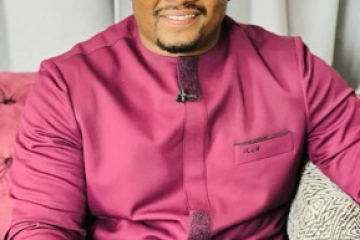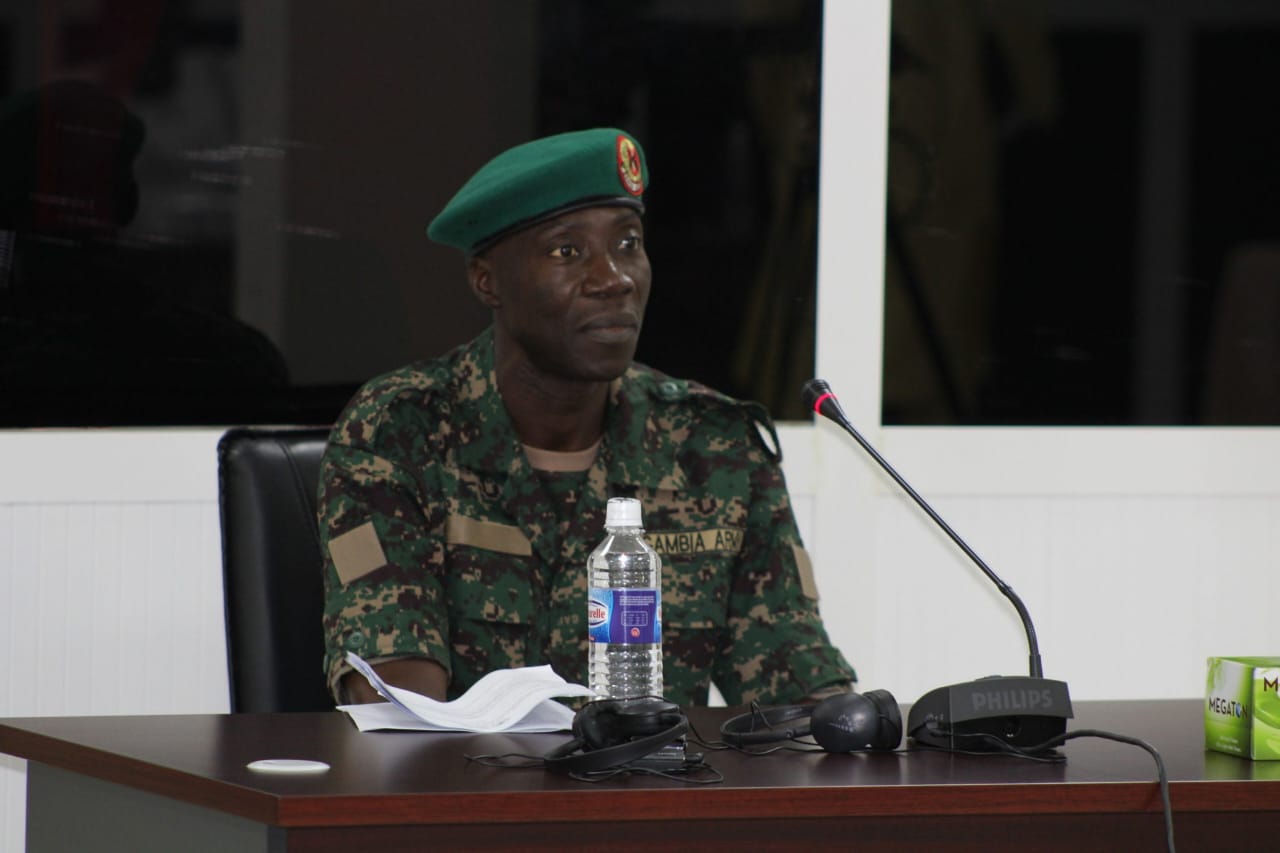
Ismaila Jammeh was credited with being founding member of the unit, having hailed from same region with, and an extended relative of Yahya Jammeh – at least, that’s what he told the panel of judges via a video link testimony from The Gambia. To him, all Jammehs in Foni, Yahya Jammeh’s descendant region in The Gambia, are relatives and therefore, described Yahya Jammeh as his brother.
The witness joined the army in 1994, the same year that Yahya Jammeh and a council of five army officers staged a successful coup against the government of Sir Dawda Jawara. The regime survived so many alleged coup-attempts during its rule in The Gambia. By year 2000, when Almamo Manneh and Landing Sanneh were accused of planning a military coup against Yahya Jammeh, Sonko was third in command of the State Guards and a part of the plan. Secretly, he recorded the plans and leaked the audio to Yahya jammeh – via Abdoulie Kujabi, another school mate and trusted ally of Jammeh, having hailed from Foni, same town as Ismaila.
Ismaila was one of the trusted aides to Yahya Jammeh. He was present when the audio was played for Yahya Jammeh in Kanilai, along with Musa Jammeh – to whom he was an orderly at the time, and Abdoulie Kujabi, who was Jammeh’s head of the National Intelligence Agency (NIA). Ismaila was also among the team of eight men, each fully armed with a pistol and Kalashnikov rifle, to be assigned with the arrest (or killing) of Almamo Manneh, who was a top Commander at the State Guards Batallion.
According to prosecutors in the Office of the Attorney General of Switzerland, leading that team was Ousman Sonko, whom Ismaila confirmed through the TRRC, planned the operation that led to the killing of Manneh at Sting Corner along Banjul Highway – a charge Sonko’s lawyer did not deny, but rather justified as normal in military code of operations, especially when a coup is planned against a leader and Head of State.
“Sonko called him (Almamo Manneh) to a meeting at the Sting Corner to finalize the plans for the coup,” Jammeh told the court, also confirming that it was a lure into an ambush as the armed soldiers waited in the surrounding bushes. “He arrived in his personal car, wearing civilian clothes,” Jammeh explained. He was hesitant to come down from the car but Sonko further urged him to come down to meet him.
“When Manneh was informed of his arrest, we all surfaced with guns pointed at him, he pulled a pistol and shouted insults at us, then fired two shots,” Jammeh added, claiming that by this time, Oumsan Sonko dived to the ground while a hail of bullets cut down Almamo to the ground, his body lying life-less.
Jammeh denied Ousman Sonko was involved in the shooting of Almamo, or even in the planning, but was quick to point out that Almamo Manneh was “arrogant” and full of “confidence” within the army that he “wanted to overthrow the president” – sure that he enjoyed the cooperation of all the strategic units to make that possible.
When the judge asked whether the military were not trained in incapacitating suspects before use of deadly force, Jammeh said they went into action with an “unpredictable” but certain notion of how Almamo would resist. So, they had no choice but to fire back at him when “he fired first.”
Mr Ousman Sonko, who served as State Guards' Commander under Jammeh and Inspector General of Police before becoming a Minister for the Interior for ten years, was head of signals at the time. After this incident, he was elevated to the State Guards Commander of the Gambia Armed Forces.
In total, he was in position of command in Gambia's security and defense apparatus for over 15 years. Until year 2000, Ismaila Jammeh was a little-known private soldier. Then after the Almamo Manneh alleged coup attempt, he began enjoying rapid promotion, moving through non-commissioned and junior commissioned ranks, and placement within trusted security units of the Army, such as State Guards and Republican Guards.
He would soon be – between 2000 and 20102 – promoted from Lieutenant to captain, to Major, then Lieutenant Colonel and Colonel. By 2016, he was Brigadier General and Commander of State Guards – a role that placed him in charge of presidential security and strategic military assets in the capital.
However, his statement to the court appears to contradict the version from the testimony at the TRRC, where he vehemently indicated that Ousman Sonko was the brain behind the ambush, among other things. When the court asked him to explain these contradictions, he blamed the trauma he suffered from the five years spent in army custody, where he was among the last of the Junglers to be released due to a lack of cooperation with the investigations.