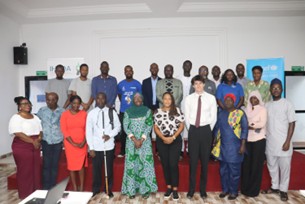
According to the organisers, the guide is being developed through a legal and policy review, stakeholder consultations, engagement with media practitioners and lessons drawn from training workshops conducted under the project.
Speaking at the engagement, GPU President Isatou Keita said the initiative was important in strengthening the media’s role in protecting children while ensuring that journalists have practical guidance when covering child-related issues.
She said the media had an important responsibility to scrutinise issues affecting children and to ensure that reporting does not unintentionally expose children to further harm.
Ms Keita stressed that journalists must look beyond the immediate impact of a story and consider how the publication of information, photographs or other details could affect a child later in life.
She urged participants to carefully examine every chapter of the proposed guide and make recommendations that would ensure the document responds to the realities facing journalists and children in The Gambia.
“We should not just be part of protecting the image of children; we must also consider the consequences our reporting can have on their lives in years to come,” she said.
The GPU president further encouraged media practitioners to critically assess the recommendations contained in the guide so that they can be effectively implemented and become part of everyday journalistic practice.
Consultant Demba Kandeh said the engagement was aimed at ensuring that the media continued to serve the public interest while adapting to the changing communication environment.
He noted that the question was no longer whether journalists should engage with new developments in media and technology, but rather how they could ensure that these developments were used responsibly and in line with professional and ethical standards.
Mr Kandeh observed that the media landscape had undergone significant transformation, moving from traditional forms of communication to radio and television, and now to social media and artificial intelligence.
He said these technological developments had fundamentally changed how information was produced, distributed and consumed, creating both opportunities and new challenges for journalists.
According to him, the changing media environment makes it increasingly important for journalists to have clear guidance on how to report sensitive issues, particularly matters involving children.
He said the guide should therefore take into account the realities of the current media environment, including the growing influence of digital platforms and emerging technologies.
The proposed Media Guide is expected to serve as a practical reference for journalists and editors covering children and child-related issues, while reinforcing principles of confidentiality, privacy, dignity, protection from harm and the best interests of the child.
The initiative comes amid growing recognition of the media’s role in shaping public understanding of children’s rights and influencing how children and vulnerable groups are portrayed in society.
The organisers said the contributions from media practitioners during the consultation would help ensure that the final guide is practical, relevant and responsive to the realities of journalism in The Gambia