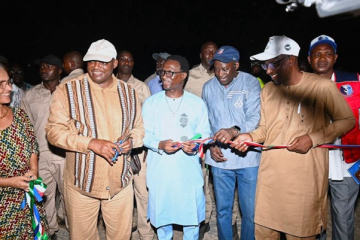
In addition, construction of 700 kilometres of new roads will soon commence through innovative financing methods, chosen to complement the existing network.
Another 200 kilometres of rural roads will be laid with funding from the World Bank-supported GIRAV Project, ensuring that remote communities gain access to reliable transport.
“Upon completion of these projects, over 50 percent of the country’s 4,000 kilometres of surveyed roads will be in good condition, connecting all communities with a dependable means of transportation,” the president stated.
Since 2017, the government has already built over 1,200 kilometres of all-weather roads, enhancing national connectivity. Key milestones include the 84-kilometre Niumi–Hakalang Road, as well as the Kiang West, and Brufut-Madiana-Bainyaka roads, which are near completion. The Sukuta overpass, part of the OIC road project, is expected to be finished this year.
Maritime transport has also seen major improvements, the president stated. Port operations in Banjul now move cargo in just 17 hours, down from over 14 days. Preparatory works for the Sanyang Deep Seaport are underway, while a new eco-friendly ferry will reduce waiting times between Banjul and Barra, improving access for farmers and traders, particularly women, in the North Bank Region.
On air travel, the president said, The Gambia and Senegal have agreed to liberalise services, reducing passenger charges and lowering travel costs between the two countries. “Plans are also advancing for an Airport Modernisation Project, which includes the construction of an ultramodern passenger terminal and other airport facilities through a Public-Private Partnership (PPP),” he stated.
These projects are part of a wider effort to close the country’s infrastructure gaps, promote economic growth, and ensure that Gambians across all regions have access to efficient transport systems, the president said.