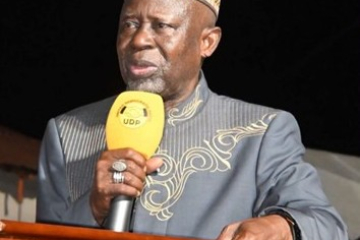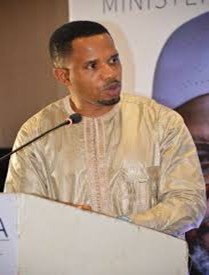
Speaking on Coffee Time on West Coast Radio with Peter Gomez, Dr. Ceesay acknowledged delays surrounding the arrival of the new ferry but explained that the project involves building a vessel from scratch in Holland, a process he said naturally comes with technical challenges.
“Any problem we’re also solving. New ferries are coming very soon, noting that initial timelines can be disrupted by technical complications. What is important is that there will be a new ferry, a green ferry.”
“If it was up to the president, we should have had the ferry since June last year,” he said, stressing that procurement realities sometimes override political will.
Beyond ferries, the minister said several national concerns are being addressed, including the ID card issue, which he described as a temporary problem that will soon be resolved.
On the economy, Dr. Ceesay argued that the government has responded decisively to the global cost-of-living crisis that followed COVID-19. He claimed that prices of key commodities have stabilised, with rice and oil prices falling from earlier highs.
“I hardly hear people complaining about skyrocketing prices anymore,” he said.
He backed his claim with inflation figures, stating that inflation dropped from 10 percent in September 2024 to 7.4 percent in September 2025, a decline of 3.6 percent.
Dr. Ceesay also referenced findings from ‘Meet the People’s Tour Report 2025’, which outlines national progress across sectors. He said access to clean water has expanded significantly, with 127 communities supplied between 2018 and 2025, benefiting over 186,000 people.
Youth unemployment has also declined, he noted, with young people not in employment, education or training falling from 43 percent in 2023 to 41 percent in 2025. Government investment in youth programmes stands at $250 million, alongside $95 million through the main enterprise fund.
Education infrastructure, according to the minister, has expanded rapidly since 2017, with 424 new schools, over 11,000 classrooms, thousands of toilets, and hundreds of solar-powered schools, computer labs and science facilities constructed nationwide.
Electricity access has also grown sharply. From 1956 to 2016, about 195,000 meters were connected. From 2017 to 2025, more than 203,000 additional connections were made. Dr. Ceesay dismissed claims of unreliable supply as political exaggeration, revealing that government spent about D1 billion on electricity subsidies in 2025 alone.
He concluded by saying the data shows steady national progress, pointing to road construction, expanded ambulance services and improved security, with The Gambia recently ranked the safest country in West Africa.