The handover ceremony includes the transfer of coordinatorship from Uganda to The Gambia, followed by a capacity-building workshop focused on Codex strategic priorities, procedures, and alignment with the African Continental Free Trade Area (AfCFTA).
The event was held under the theme: ‘Strengthening Continental Food Safety Governance for Harmonization of Standards, Trade Facilitation, and Promoting Health’.
It was organised by the Food Safety and Quality Authority (FSQA) in partnership with AU-IBAR and the Uganda National Bureau of Standards (UNBS),
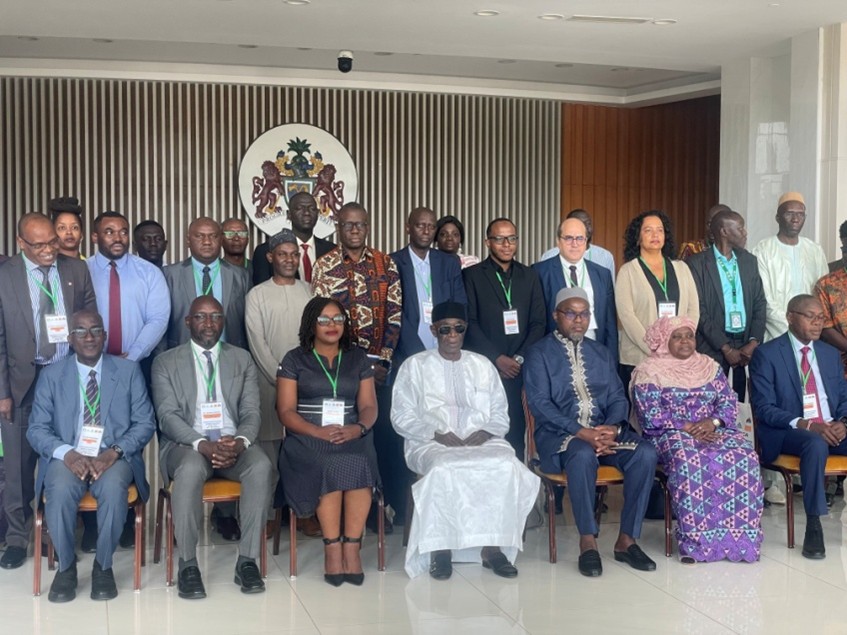
The event which took place at the Sir Dawda Kairaba Jawara International Conference Center yesterday, was graced by the Vice President of the Republic of The Gambia alongside cabinet ministers and the Speaker of the National Assembly.
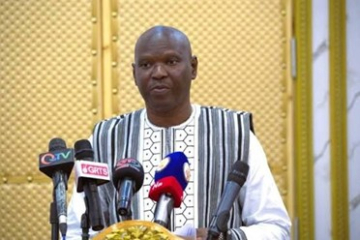
In his welcoming remarks, The Director General of the Food Safety and Quality Authority (FSQA), Mr. Mamodou Bah, described The Gambia’s assumption of the CCAFRICA coordinatorship as the result of years of deliberate African leadership, trust-building, and institutional commitment.
Mr. Bah welcomed high-level delegations from across Africa and international partners, noting that it was the first time FSQA had convened such a diverse and distinguished gathering.
He paid tribute to the founding members of FSQA, acknowledging their role in laying the foundation for the authority’s current achievements.
Mr. Bah highlighted The Gambia’s journey within Codex, recalling its appointment as an advisor in 2020 alongside Cameroon and Tanzania. He emphasised that the country did not merely occupy leadership positions but prepared strategically for greater responsibility, overcoming linguistic and institutional barriers to unify African voices within Codex.
He reaffirmed The Gambia’s belief that African leadership in global food safety governance is non-negotiable, stressing that the continent must remain “at the table, not on the menu.” He also praised the African Union, Codex leadership, and international partners for supporting Africa’s progress in food safety standard-setting.
Mr. Andrew Othieno, representing the Executive Director of the Uganda National Bureau of Standards,, commended Africa’s progress in food safety while formally handing over the CCAFRICA coordinatorship to The Gambia.
Mr. Othieno reflected on Uganda’s tenure as coordinator since 2020, during which the country hosted the 24th and 25th CCAFRICA sessions and oversaw the adoption of key regional Codex texts, including the regional standard for dried meat and guidelines for harmonised food safety legislation.
He underscored the economic importance of standards, citing a 2023 ISO study which found that standards contributed nearly 24 percent of Uganda’s GDP growth over a 20-year period.
According to him, Codex standards are critical to reducing technical barriers to trade and advancing Africa’s integration agenda under the AfCFTA.
As Uganda formally stepped aside, Mr. Othieno expressed confidence in The Gambia’s leadership and outlined priority areas for the incoming coordinator, including capacity building, scientific data generation, and stronger African participation in FAO/WHO advisory bodies.
Pateh Jah, Permanent Secretary at the Ministry of Trade, has emphasised that Codex standards are central to Africa’s trade competitiveness and economic transformation.
Mr. Jah noted that Codex standards are explicitly recognised under the World Trade Organization’s Agreement on Sanitary and Phytosanitary Measures, providing predictability and reducing unjustified trade restrictions.
He highlighted the importance of harmonised food standards as Africa advances the African Continental Free Trade Area, citing projections that intra-African trade could increase by over 50 percent by 2035. According to him, this growth can only be realised with strong, science-based food safety systems.
Jah reaffirmed The Gambia’s commitment to inclusive and transparent leadership, stressing the need for close collaboration between trade authorities, food safety regulators, and technical agencies to strengthen Africa’s collective voice in global standard-setting.
The Speaker of the National Assembly, Hon. Fabakary Tombong Jatta, described The Gambia’s assumption of the CCAFRICA coordinatorship as a moment of profound national pride and continental responsibility.
He said food safety in Africa is not a luxury but a necessity, directly linked to public health, economic growth, and regional integration.
Hon .Speaker emphasised that harmonised food standards are critical to unlocking the full potential of the AfCFTA.
Hon. Jatta assured delegates of the National Assembly’s full legislative support to strengthen food safety frameworks and international obligations, noting that Codex work must reflect Africa’s unique food systems and development priorities.
He called on all member states to join The Gambia in fostering inclusive, bold, and collaborative leadership throughout its tenure.
In his keynote address, Chairperson of the Codex Alimentarius Commission, Dr. Allan Azegele, praised Uganda’s exemplary leadership as outgoing coordinator while expressing confidence in The Gambia’s ability to lead the African region forward.
Dr. Azegele noted that Uganda’s tenure strengthened regional participation, amplified Africa’s voice in global food standard-setting, and reinforced the importance of science-based standards and fair trade practices.
Welcoming The Gambia, he stressed that the role of coordinator requires inclusiveness, consensus-building, and strategic vision, particularly as many African countries continue to face capacity challenges in food safety and trade.
He reaffirmed the Commission’s commitment to supporting The Gambia and encouraged all African member states to maintain strong collaboration to advance consumer protection and sustainable development.
The event, was graced by Vice President Muhammed B.S. Jallow, who reaffirmed The Gambia’s commitment to inclusive and transparent leadership as it assumes the CCAFRICA coordinatorship, underscoring the importance of harmonised food safety standards for public health, regional integration, and fair trade across Africa.