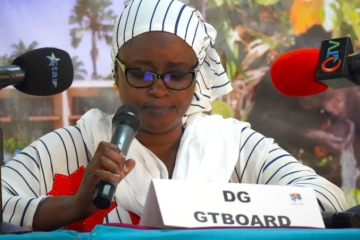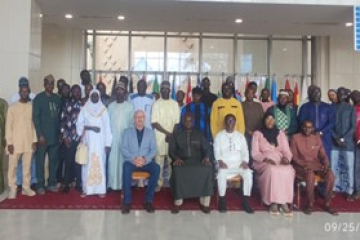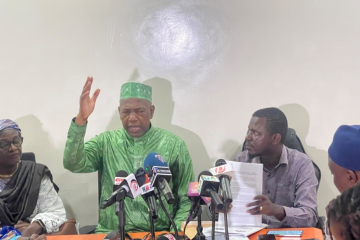
Welcoming the gathering, Mam Jarra Marega, Programme Manager for Mental Health, said the forum reflects a shared commitment to advancing mental health as a core pillar of health and ensuring that laws reflect current realities.
“For over a century, mental health in The Gambia has been governed by legislation first written in 1917 and last revised in 1964.”
She observed that the existing law, commonly referred to as the Lunatic Detention Act’ contains no definition of a person living with a mental health condition and makes no provision for their care or rights.
“It has no provision for a person living with a mental health condition. There is no definition of a person living with mental health condition.” She stressed.
Dr. Muhammed Abduaziz, head of Division, Diseases Control and Prevention at Africa CDC, explained that the burden of Non-Communicable Diseases including mental health condition is rapidly growing in Africa.
“82 percent of premature death from NCDs in 2021 occurred in low and middle-income countries, where most African countries lie.”
He added that over 80 percent of countries in the African region lack mental legislation, while 50 percent have outdated laws that fail to promote the rights of people with mental disabilities.
“There is a need to align our laws with current international best practices and human rights standards. The old laws have failed to deliver,” he added.
Dr. Abdulaziz further noted that mental health is often neglected in Africa and wrongly treated as clinical issue instead of public health priority.
“We have been using clinical methodology to take care of what is essentially a public health programme,” he further stated.
Deputysing the minister of health, Dr. Momodou T Nyassi, Director of Health Services, reminded that The Gambia has taken important steps to strengthen its mental health system including developing a national mental policy and initiating a process to modern legislation.
The new bill, he added, is designed to protect the rights and dignity of people living with mental health condition, promote access to quality, community-based care and provide a clear framework for accountability and governance.
“However, we recognize that the journey from drafting to enactment and implementation requires sustained collaboration and technical support.” he stated.
He also acknowledged that the support of WHO and African CDC, noting that their initiative provides an opportunity to refine the Bill and learn from other African countries.
“We greatly appreciate the delegation from WHO, Africa CDC, distinguish parliamentarians and colleagues from Civil Society Organisation and youth organization.”
Dr. Nyassi reaffirmed the Ministry’s commitment to supporting legislations that will restore dignity to people living with mental challenges while also creating an enabling environment through favorable policies to address the growing challenge in the country.
The event also witnessed case presentations of other African countries and how they were able to transform their old mental health acts to reflect current realities.