“The Gambia Government will continue to partner with the IMF, World Bank Group and other development partners as we address challenges, especially unemployment, poverty and climate change,” President Barrow declared.
The President said the Caucus theme – “Transforming Africa’s Economies through Investment, Innovation, and Inclusion” – resonates directly with the continent’s current realities. He stressed that governments cannot achieve transformation alone, urging collaboration between policymakers, the private sector, academics and development partners.
“This meeting provides a rare opportunity to deliberate on shared African priorities and reaffirm our collective commitment to accelerating economic transformation,” he said.
Barrow called for urgent investment in infrastructure, energy and digital connectivity, warning that Africa’s persistent infrastructure gap remains a major obstacle to sustainable growth. He also highlighted the need to strengthen trade facilitation under the African Continental Free Trade Area (AfCFTA), including access to credit, efficient payment systems and guarantees.
Gambia’s Commitment
The Gambian leader reaffirmed his government’s commitment to domestic revenue mobilisation, tax reforms and digitalisation, while calling on the IMF and World Bank to support African countries in broadening tax bases and combating illicit financial flows.
He noted that his administration has invested heavily in road and energy infrastructure over the past nine years, alongside significant spending on health, education and skills development to prepare young people for the future job market.
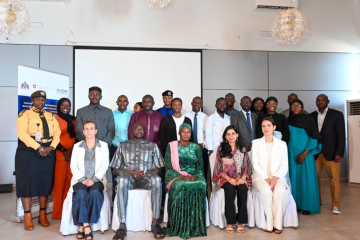
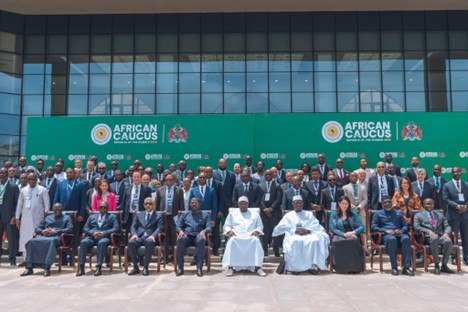
The Caucus, attended by African finance ministers, IMF and World Bank governors, development partners and private sector leaders, marks the first time The Gambia has hosted the high-level meeting.
President Barrow expressed gratitude to the IMF, World Bank Group and other partners for their support, and encouraged delegates to experience The Gambia’s rich culture and hospitality during their stay.
“We pledge to continue working together to create a brighter and more prosperous future for The Gambia and the entire African continent,” he said.
Finance Minister Seedy Keita highlighted The Gambia’s recent economic gains, noting that tax revenue rose from D11 billion to D15 billion without raising tax rates, thanks to digitalisation and stronger revenue administration.
He pointed to improvements in growth, inflation management and reforms aimed at creating a better business environment, with more than 1,200 new businesses established.
“This year’s theme reflects our response to current challenges. It is more than a statement of intent; it is our shared commitment,” Mr Keita said. He urged African nations to mobilise domestic resources, strengthen financial systems, support small and medium-sized enterprises and invest strategically in energy and infrastructure.
A Call for Transformation
World Bank Vice President Ousmane Diagana told delegates that Africa faces significant challenges but also has a rare opportunity to accelerate structural transformation if governments, partners and the private sector act decisively.
He stressed that job creation must remain central to Africa’s development agenda, identifying energy, agribusiness, manufacturing, healthcare and tourism as sectors with strong employment potential.
“We have to build infrastructure, invest in human capital, promote innovation and ensure the benefits of growth reach young people, women and vulnerable communities,” Mr Diagana said, reaffirming the World Bank Group’s commitment to expanding financing and deepening engagement with African countries.