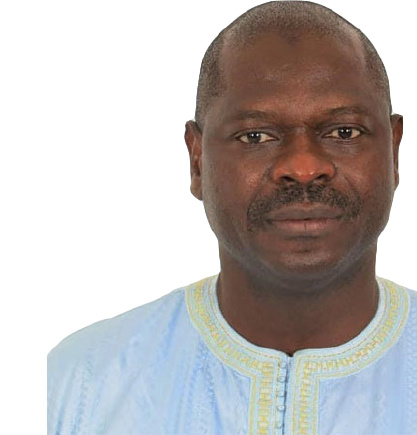
Responding to a question from the Member for Upper Nuimi, Hon Alhagie Mbowe, the finance minister laid out details of government receivables, revealing that the bulk of the debt is owed by state-owned enterprises.
Keita told lawmakers that government lending to state-owned enterprises currently stands at $331 million dollars, equivalent to about 23.78 billion dalasi. The debts, he explained, arose mainly from government on-lending arrangements to these institutions.
“The principal entities include GCAA, Gamtel and NAWEC,” the minister said, noting that these organisations account for the largest share of the outstanding obligations to the state.
He stated that government groups its receivables into three categories: debts owed by institutions, outstanding imprest owed by individuals, and a third category linked to court award judgments in favour of the government.
According to the minister, the second category imprest owed by individuals amounts to about 18.7 million dollars, with detailed records listed in government reports covering the period up to 2022 and updated to 2025.
However, when pressed by Mbowe for the figures relating to the third category, Keita said the information could not yet be disclosed.
He explained that the court-related receivables are tied to ongoing negotiations governed by a non-disclosure agreement and currently handled by the Ministry of Justice.
“The details cannot be shared at this stage, the minister told the Assembly, the amounts remain under negotiation.”
Mbowe challenged the explanation, arguing that such information should normally be reflected in government accounts, especially where court awards are involved.
But Keita insisted that the funds fall under what he described as contingent assets meaning they cannot be counted in government accounts until negotiations are completed and binding settlement agreements are signed.
“Until the negotiation is firmed up and payment plans are agreed, it does not become receivable,” he said.
The minister also confirmed that the court-related cases involve both domestic and international matters.
During the exchanges, lawmakers raised concerns about how government intends to deal with debts involving institutions that both owe and are owed money by the state, including the Gambia National Petroleum Company and the Social Security and Housing Finance Corporation.
Keita said government would not offset those liabilities until both parties reach a negotiated settlement.
He also made it clear that despite ongoing restructuring discussions involving some state institutions, government has no immediate plans to write off their debts.
“The power to write off government receivables only resides with the National Assembly,” he told members.
When asked whether former president, Yahya Jammeh, appears on the list of individuals owing the state, the minister replied that the list relates only to imprest holders and does not include his name.