Ceesay said FAO is backing young entrepreneurs through its Accelerator Programme, which trains business coaches in investment readiness, financial management, and risk assessment. Under the Hand-in-Hand Initiative, rural youth groups and food processors are also receiving support in agribusiness and fisheries.
“Science, technology, innovation, and artificial intelligence are becoming important tools for improving agricultural productivity and resilience,” he said.
UN official Mandisa Mashologu described food insecurity, climate change, and youth unemployment as “interconnected challenges requiring innovative and collaborative solutions.” She noted The Gambia has made progress in youth engagement but warned that climate shocks and import dependence continue to undermine livelihoods.
“Transforming agri-food systems is essential not only for addressing hunger but also for creating jobs, improving health, building resilience, and promoting peace and security,” Mashologu said.
Agriculture Ministry Planning Director Francis Mendy said government is scaling up youth participation through the Youth-Based Matching Grant Programme, which currently supports 200 youth-led enterprises with IFAD backing. The Food Systems Resilience Programme and GERA project are also giving young farmers access to climate-smart technology, financing, and training.
“The Gambia continues to spend heavily on food imports, particularly rice and onions, despite opportunities for local production,” Mendy said. He called for more investment in irrigation, mechanisation, research, and market systems.
TANGO Executive Director Ndey Sireng Bakurin said civil society is bridging policy and grassroots realities through climate-smart agriculture, women’s empowerment, and youth leadership projects.
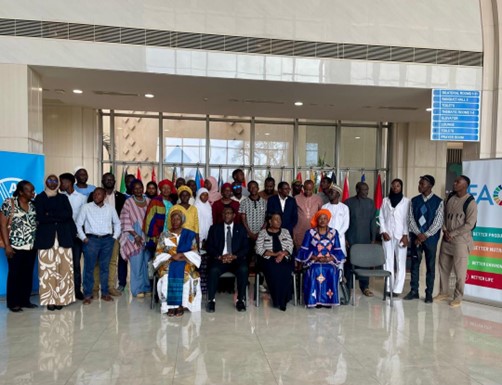
The convergence reviewed The Gambia’s National Food Systems Pathway and pushed for stronger links between science, policy, and communities.