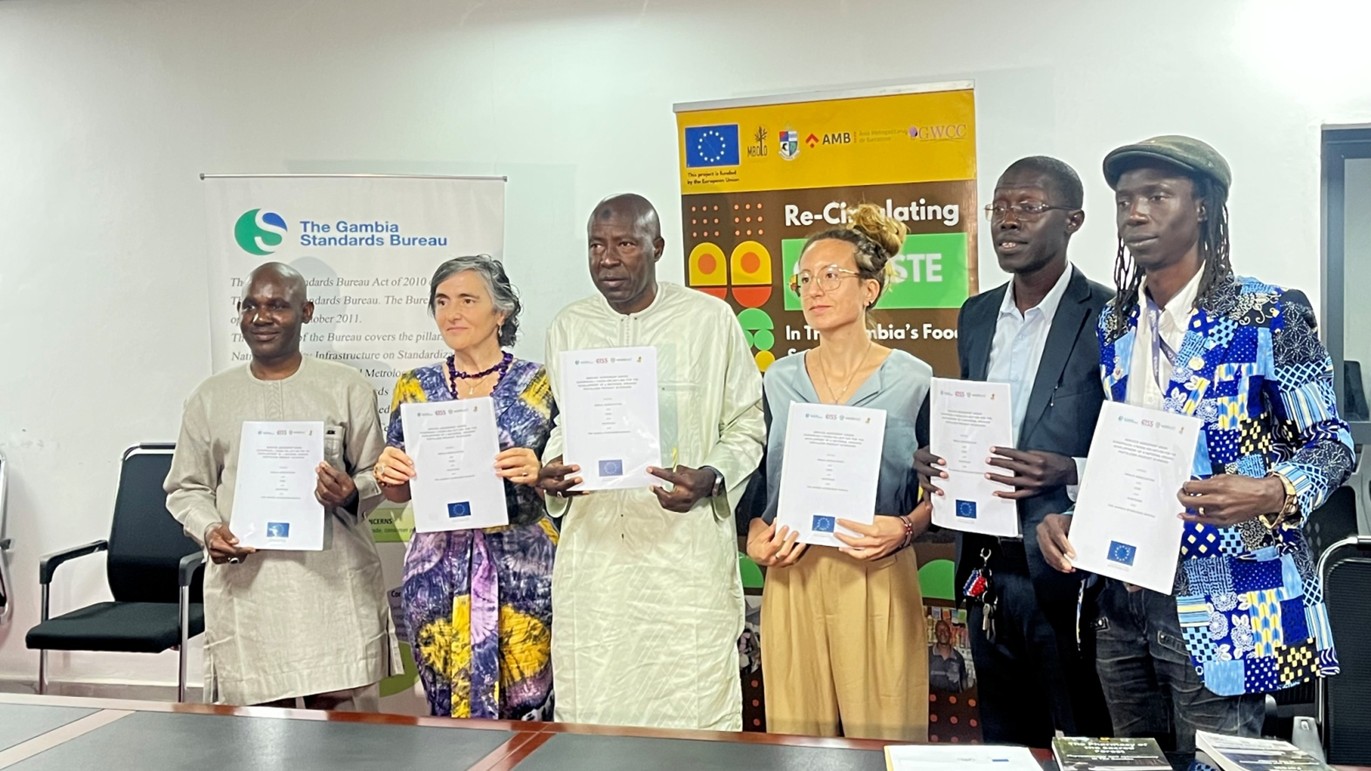
Speaking at the ceremony, Papa Secka, Director General of the Gambia Standards Bureau (GSB), said the partnership aims to establish clear specifications for organic fertiliser production in the country. According to him, the agreement brings together the Bureau and several partners supported by the European Union who are already producing organic fertiliser across different regions.
He explained that the development of standards has become necessary due to the growing number of organic fertiliser products being produced locally as well as those imported into the country. Establishing a recognised national standard, he said, would help ensure product quality, protect the health and safety of producers, and guarantee value for money for farmers and other consumers.
Secka noted that the standard will define key requirements including quality parameters, testing procedures, labelling guidelines and certification processes. These will be developed within the framework of the Gambia Standards Bureau through a technical committee comprising experts from partner institutions and other relevant stakeholders.
Malang Sambou, Executive Director of the Mbolo Association, described the agreement as a historic step for agriculture and the circular economy in The Gambia. He said the initiative represents a new approach to food production and waste management by transforming organic waste into valuable agricultural inputs.
According to him, the project will introduce a system to collect segregated bio-waste from vendors in selected markets using solar-powered electric tricycles. The waste will be processed at a solar-powered compost plant, where it will be converted into organic fertiliser. He said that the initiative is expected to divert over a thousand tonnes of waste from dumpsites annually while producing significant quantities of organic fertiliser for farmers.
Lamin Sanyang, Country Programme Manager for WasteAid, said the project will address several challenges the country faces, including declining soil fertility, increasing waste generation and the need for more sustainable farming methods. Transforming organic waste into fertiliser, he noted, can improve soil health, increase crop yields and reduce the amount of waste ending up in dumpsites.
European Union Ambassador to The Gambia, Imma Roca Cortés, emphasised that clear standards are essential for the success of organic fertiliser production. She noted that standards help protect farmers, safeguard the environment and build trust in the market, enabling sustainable agricultural practices to flourish.
Permanent Secretary at the Ministry of Agriculture, Alhagie Nyangado, reaffirmed government’s commitment to agriculture, which he said provides livelihoods for the majority of Gambians. He stressed the need for policies that gradually integrate organic fertilisers into the national fertiliser system, reducing reliance on imported chemical fertilisers while supporting sustainable production methods.
He added that broad consultation with relevant institutions will be critical in ensuring the successful development and implementation of national standards for organic fertilisers in The Gambia.