Its human rights jurisdiction has become a cornerstone of regional accountability and “a beacon of hope for victims of violations,” officials said. The Court’s jurisprudence has helped consolidate protection standards and strengthened trust in supranational justice.
However, the Court faces persistent challenges in getting member states to implement its rulings, despite treaty commitments.
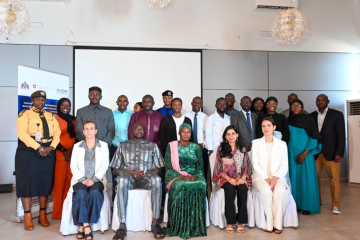
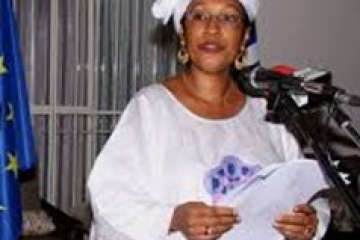
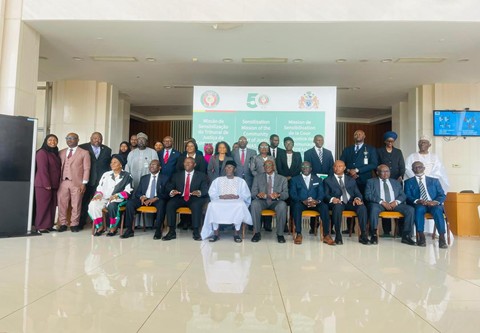
Addressing stakeholders in Banjul, ECOWAS Court President Hon. Justice Ricardo Cláudio Monteiro Gonçalves said the Court has played a decisive role in applying the African Charter on Human and Peoples’ Rights and other international instruments in the sub-region.
“Through the Court’s jurisprudence, it has promoted access to justice, strengthened democratic governance and ensured redress in cases of fundamental rights violations,” Justice Monteiro said.
“But the Court’s journey has not been without challenges. One of the most persistent difficulties relates to the adherence of Member States to the legal instruments governing the Court, as well as to the enforcement of its decisions. The effectiveness of any regional court ultimately depends on the political will of States to fulfil their obligations,” he added.
Justice Monteiro noted that at the last Summit of Heads of State and Government in Abuja on 14 December 2025, eleven Member States signed the Supplementary Act harmonising the 1991, 2005 and 2006 Protocols. He expressed optimism that once in force, States will fully implement its provisions.
He praised The Gambia for “remarkable efforts” in strengthening the rule of law and promoting transitional justice. He said the Truth, Reconciliation and Reparations Commission marked a “historic milestone” in national reconciliation, enabling the country to confront its past, promote truth, ensure accountability, and lay foundations for lasting peace.
“The work of the Commission, praised by the African Union and human rights organisations, stands as a notable example within the ECOWAS region, demonstrating how justice can serve as an instrument for collective healing and institutional rebuilding,” he said.
Speaking for President Adama Barrow, Chief Justice Hassan B. Jallow said The Gambia “remains firmly committed to ECOWAS as its premier regional institution for economic and social progress through integration, fostering peace, stability and respect for the rule of law.”
He stressed the need to strengthen the Court’s visibility in all member states. “For any court to effectively fulfil its mandate, awareness of its existence helps the people, us the lawyers and institutions about the availability of a judicial process beyond our national frontiers,” Hon Jallow said. “A public that is unfamiliar or unaware of the ECOWAS Court will not be able to access and utilise its service.”
The Chief Justice urged the private sector to develop interest in the Court’s jurisprudence and enhance capacity in regional human rights litigation. He said civil society plays a critical role in advocacy and public education.
“We believe the jurisprudence of the Court, as well as Community law generally, needs to be integrated into law school curricula in The Gambia, both at the university and professional level,” he said. “This would help familiarise law students early with regional justice mechanisms and how to access them.”
Other speakers included Dr. Yaouza Ouro-Sama, Registrar of the ECOWAS Court; Mod Ceesay, Minister for Trade, Industry, Regional Integration and Employment; and Speaker Fa Bakary Tombong Jatta, who all highlighted the importance of sensitisation.