The dialogue culminated in the adoption of a landmark Communiqué, outlining a bold commitment to transforming West Africa into a digitally integrated, peaceful, and prosperous region. Participants called for a human-centered approach to technology that prioritises regional sovereignty and social inclusion.
A primary outcome of the dialogue is the commitment to establishing a Regional Digital Single Market. This initiative aims to harmonise digital regulations, data protection laws, and cybersecurity frameworks across all Member States. By expanding broadband access, developing interoperable fintech systems, and creating a unified digital identity infrastructure, ECOWAS seeks to eliminate digital borders and spur economic growth for its 400 million citizens.
The Dialogue resolved to develop a Regional AI Governance Framework in a bid to addressing the double-edged sword of emerging technologies. While acknowledging AI’s potential to revolutionise health, agriculture, and education, the Communiqué stresses the urgent need to mitigate risks such as algorithmic bias, labour displacement, and the use of AI in spreading "information disorder."
"Technology must be harnessed for development and transparency, not for domination or exclusion," the Communiqué stated, emphasising that West Africa must transition from being a consumer of technology to an active co-creator.
The participants identified "information disorder"—including state-sponsored disinformation and extremist recruitment—as a critical threat to regional peace. To counter this, the meeting stressed the need to: Establish a regional framework to monitor and respond to foreign information operations. Strengthen ethical journalism and fact-checking networks, and upgrade ECOWAS Radio in Liberia to a truly regional hub, broadcasting in multiple local languages to reach underserved populations.
To combat brain drain and bridge the digital divide, the Dialogue called for immediate investment in Centres of Excellence and enhanced STEM (Science, Technology, Engineering, and Mathematics) education. A specific emphasis was placed on gender-based inclusion, ensuring that women and girls are supported as leaders in the tech ecosystem. In a move toward institutional sustainability, the Dialogue reminded Member States of the necessity to fulfill their financial obligations to the Commission, noting that "the need for member countries to pay up dues as and at when due" is fundamental to realising these ambitious technological goals.
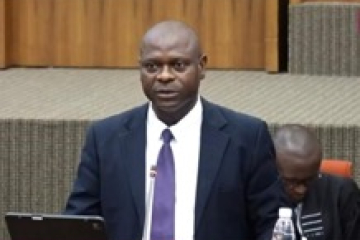
Delivering the closing remarks on behalf of the President of the ECOWAS Commission, Hon. Abdou Kolley, Director of Cabinet, emphasised that the transition to a "future-ready" West Africa is no longer optional. He noted that consultations during the past three days provided critical insights into how Artificial Intelligence (AI) and digital transformation can be harnessed to strengthen governance, enhance peace and security, and expand economic opportunities for all Community citizens.
Hon. Kolley stated that these exchanges have reaffirmed that while ECOWAS has achieved remarkable progress over the past five decades, the journey forward requires renewed solidarity, innovation, and resilience.
He noted that the ideas shared during the meeting will not remain abstract; they will inform concrete commitments that will transform ECOWAS into a truly people-centered and prosperous organisation. Hon. Kolley also told delegates that as ECOWAS moves toward the 2050 milestone, the Commission remains committed to ensuring that the voices of its citizens shape the strategic direction of the Community, utilising 21st-century tools to solve age-old challenges of development and unity.
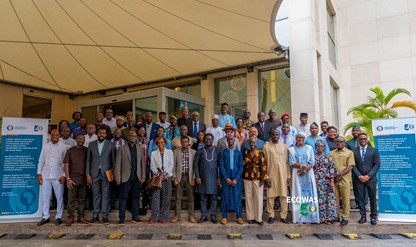
The recommendations from this Lagos Dialogue will serve as a foundational pillar for the upcoming Summit of the Future of West Africa. This roadmap ensures that by 2050, the ECOWAS region is not only digitally empowered but also ethically grounded, telling its own story on the global stage. The event was organised by the ECOWAS Commission in partnership with the Amandla Institute and WATHI, hosted by the Government of the Federal Republic of Nigeria.