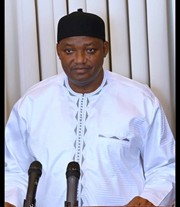
Despite this, the president described the Gambian economy as resilient. “Growth remains steady, with real GDP estimated at 5.9 percent in 2025, slightly up from 5.7 percent in 2024.” This performance, he said, is driven by construction, agriculture, tourism, trade, telecommunications, and other services.
Inflation has also eased, dropping from 10.2 per cent in December 2024 to about 6.6 per cent by December 2025, he stated, saying the improvement is linked to tight monetary policy and better domestic supply conditions, offering some relief across the economy.
Still, the spotlight remains firmly on public debt. While projected at 68.8 per cent of GDP in 2026, the president maintained that the figure “reflects a stabilised position” now on a downward path. By December 2025, the debt-to-GDP ratio had already declined to 71.8 per cent from 73.6 per cent in 2024.
The stability of the Gambian Dalasi was also highlighted, said to be supported by strong inflows from remittances, grants, and tourism. The president acknowledged the role of the Diaspora, noting that remittances reached US$872 million in 2025, representing 34 per cent of GDP and providing critical support to households and the broader economy.
Attention was also drawn to reforms in state-owned enterprises. The government says efforts to restructure and improve oversight are beginning to yield results. In 2025, the sector recorded a consolidated net profit of D2.5 billion, a significant turnaround from the D2.6 billion loss posted in 2024.
With the establishment of the SOE Commission and tighter monitoring systems, five state-owned enterprises are now expected to pay dividends to government for the first time, according the president, who described these outcomes as the result of difficult but necessary policy decisions, insisting that ongoing reforms are beginning to deliver tangible results even as expectations continue to rise.