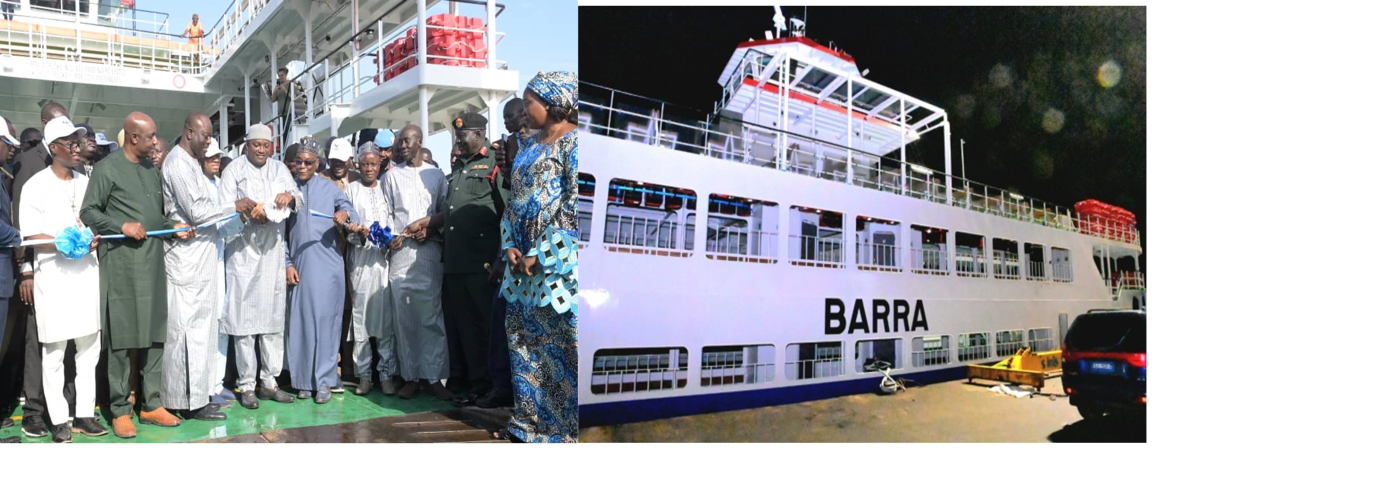
The commissioning ceremony drew thousands of Gambians, eager to witness what many hailed as a groundbreaking milestone in President Adama Barrow’s administration—a promise made, and now delivered. The vessel carried jubilant passengers who celebrated the smooth, efficient crossing. Many described the moment as symbolic of a nation stepping confidently into a future of modern, sustainable infrastructure.
The new ferry is part of Barrow’s broader transformative agenda to modernize national infrastructure, reduce travel delays, and promote environmentally friendly transport solutions. Its commissioning marks a significant step in improving connectivity between communities, boosting trade, and enhancing daily life for thousands of Gambians who rely on river crossings.
As the vessel glided into Banjul’s port, passengers waved with joy, signaling the beginning of a new chapter in Gambian transport history. The journey may have lasted just 28 minutes, but its impact will resonate for decades.
Speaking at the event held in Barra, President Barrow said: “The socio-economic wellbeing of The Gambia is closely linked to the strength of its domestic production base and its participation in regional and international trade. For this reason, the efficiency of our major trade gateways, such as the seaports, ferry services, airport, and telecommunications systems, remains fundamental to sustained economic growth and competitiveness.”
He added: “Recognising this reality, my government has prioritised the continuous development of transport infrastructure under the National Development Plan (YIRIWA). Investment in this sector is central to our ambition of positioning The Gambia as a hub for sub-regional trade, value addition, distribution, and re-export activities.”
The River Gambia, he said, which stretches about three hundred and sixty (360) kilometres inland, effectively divides our country into two. “In this context, reliable ferry services linking the North and South Banks are indispensable. For decades, the ferry services have operated under intense constraints, facing growing demand from increasing vehicular traffic, freight movement, and passenger volumes.”
“While today’s commissioning marks a significant achievement, it does not signal the end of the challenges confronting the ferry services. Infrastructure investment must be matched by wise, professional management for effective utilisation, operational efficiency, and consistent delivery of safe and reliable services.”
“It is obligatory upon the Management of the Ferry Services, therefore, to ensure that this huge investment is supported by sustainable operational frameworks that minimise costs, strengthen maintenance systems, and enhance customer service,” he emphasised.
President Barrow further added: “My administration attaches particular importance to the ferry services because of their direct impact on the socio-economic wellbeing of our citizens. Transport hubs and modes, such as ferry services, are vital links within both national and global supply chains.”
“Their efficiency influences trade flows, mobility, and overall economic productivity. Accordingly, the Government will continue to provide the necessary support to The Gambia Ports Authority in implementing its development plans aimed at upgrading ferry infrastructure and service delivery.”
He expressed gratitude to the African Development Bank (ADB), describing them as‘a longstanding and valued partner, for its financial support in facilitating the acquisition of Barra.’ He also thanked DAMEN Shipyards for their technical expertise, which he said led to the construction and delivery of the vessel.
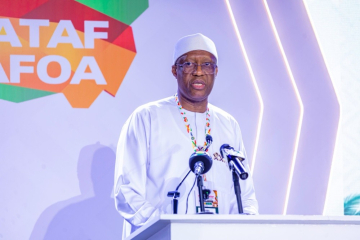
Representing the African Development Bank (ADB), Lamin Barrow described the ferry as a “transformative innovation” capable of carrying up to two thousand passengers and many vehicles. He confirmed the project was funded through a grant by ADB, and highlighted the bank’s long-standing partnership with The Gambia, which has supported projects worth over $400 million since 1974. He commended the ferry’s environmentally friendly design, aligning with global climate goals.
He said the commissioned of the new ferry represents a transformative investment in sustainable maritime transport with hybrid green technology, claiming that the ADB priorities support for the transition to green climate-resilient transports systems.
Gambia Ports Authority (GPA) Managing Director Ousman Jobarteh described the ferry as historic, being the second commissioned under Barrow’s administration. He assured that maintenance would be prioritized, with a resident engineer working alongside national experts. The ferry, he noted, can carry 2,000 passengers and is equipped with CCTV for enhanced safety and comfort.
Governor Lamin Saidykhan echoed the sentiment, calling the ferry a “milestone in our national journey for sustainable development.” He stressed its role in connecting communities, facilitating trade, and modernizing infrastructure.
Chief of Lower Nuimi George Sonko, Youth leader Kebba Jallow, and Women leader Mai Saidy, both hailed President Barrow for the transformative development in the region, ranging from roads, electricity, school, and among others.