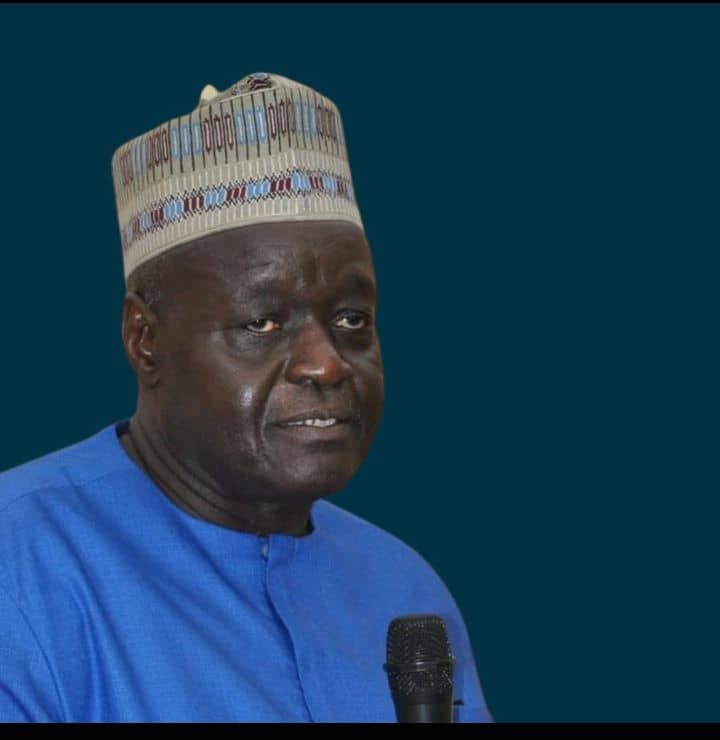
In a widely circulated reflection titled: ‘Ten Historic Facts Every Gambian Should Know’, Ambassador Touray said that The Gambia, noting from Independence in 1965 through 1994, constructed enduring republican institutions anchored in constitutional democracy, civil service professionalism, rural and cooperative development, investment in education and health, and principled regional and international diplomacy.
“These institutions remain the backbone of the Gambian state today,” Touray stated, noting that although some have been reformed, renamed, or expanded, they are fundamentally rooted in the Jawara era. “These are not myths. These are facts,” he stressed, adding that history must not be allowed to “proceed in silence.”
Ambassador Touray recalled that shortly after Independence, The Gambia formally informed the British government that it would no longer require financial subvention, a decision that birthed the national philosophy of TESITO – Self-Help and Self-Reliance. He described this as a bold assertion of economic sovereignty at a critical moment in the nation’s history.
He further highlighted that many years after Independence, government expenditure broadly matched revenue, making balanced budgets the norm rather than the exception. According to him, this reflected responsible public finance management, strong budgetary control, and a culture of living within national means.
Touray pointed out that disciplined monetary management enabled the Dalasi to attain Article VIII status of the International Monetary Fund (IMF), granting it full convertibility for current account transactions and recognition alongside major global currencies, an indicator of international confidence in The Gambia’s macroeconomic governance at the time.
He also cited landmark investments such as the acquisition of the ocean-going vessel MV Bintang Bolong, the establishment of Gambia Airways in partnership with British Caledonian Airways/British Airways, and the creation of the Tourism Development Area (TDA) as evidence of strategic national planning.
Under the TDA model, the state partnered with the private sector to develop world-class hospitality facilities, including the Atlantic Hotel, Sunwing Hotel, Novotel Kombo Beach, Senegambia Beach Hotel, Kairaba Beach Hotel, and major ventures in aquaculture and ground tour operations.
Ambassador Touray noted that The Gambia was once a net exporter of high-value products, supplying horticultural produce to the United Kingdom, shrimps and sole fish to Europe, pelagic fish to Ghana, hides and skins to Belgium and Italy, N’Dama cattle to Nigeria, flowers to Europe, and manufactured goods such as Julbrew Beer across West Africa.
He added that the country also achieved value addition through refined groundnut oil production, cotton exports from Basse, groundnut cake exports to Mauritania, and processed horticultural products such as lime juice and hibiscus under CitroProducts Gambia Limited.
Touray further recalled that Banjul International Airport was designated by NASA as a strategic landing and support site for U.S. space missions due to its geographic location and runway strength, an honour held by few African countries.
He also noted The Gambia’s international reputation as a human rights champion, which led to its unanimous selection as host of the African Centre for Human Rights, and the global cultural impact of Alex Haley’s Roots, which traced African-American ancestry to Juffureh through the story of Kunta Kinte.
According to Ambassador Touray, up to 1994, The Gambia’s public service was widely adjudged by institutions such as the United Nations, World Bank, IMF, and African Development Bank as one of the best-run public administrations in Africa, known for professionalism, discipline, and integrity.
He also referenced foreign exchange stability in the early 1990s, noting that in July 1994, one U.S. dollar exchanged for D9.58, underscoring the strength of macroeconomic management at the time.
In his closing reflection, Ambassador Touray urged Gambians not to forget their national history, stating that “nations do not decline by destiny, but by forgetting who they are.”