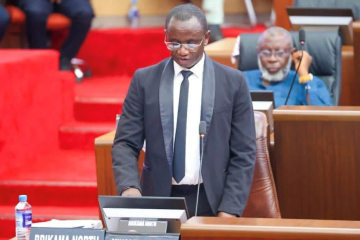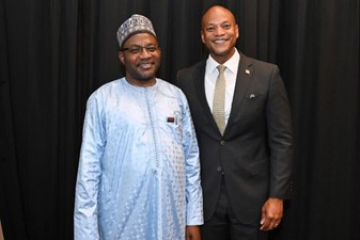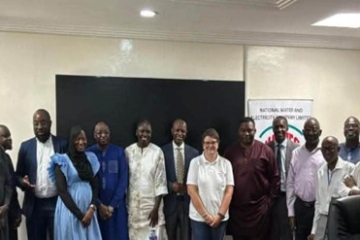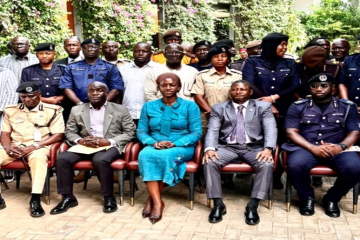
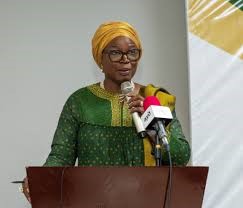
The side event, hosted by Equality Now in partnership with the Special Rapporteur on the Rights of Women in Africa, IPAS and SOAWR, brought together ministers, commissioners, civil society leaders and human rights advocates to launch the “Advocacy Framework on Withdrawing Reservations to the Maputo Protocol.”
Held at the Sir Dawda Kairaba Jawara International Conference Centre on Monday, the event focused on strengthening women’s rights protections across Africa and addressing growing resistance to gender equality and sexual and reproductive health rights.
The event observed the official launch of the Advocacy Framework, aimed at guiding governments, human rights institutions and civil society groups in pushing for the full implementation of women’s rights protection across Africa.
Opening the session, Commissioner Janet Ramatoulie Sallah-Njie, Special Rapporteur on the Rights of Women in Africa, described the framework as a “roadmap, tool and call to action” aimed at helping African states remove reservations that weaken the full implementation of the Maputo Protocol.
She said although 46 African Union member states have ratified the protocol, several countries still maintain reservations on key provisions relating to marriage, inheritance, affirmative action and reproductive rights.
She challenged claims that the protocol conflicts with African or religious values, arguing that the treaty instead reflects “dignity, equality, justice and the liberation of women from harmful practices.”
“Reservations are not neutral. They become barriers between women and their rights,” she stated, urging governments to fully implement the protocol.
Fatou Kinteh, minister for Gender, Children and Social Welfare, shared The Gambia’s experience in withdrawing reservations, describing it as a result of sustained advocacy, legal reforms and collaboration between government and civil society organisations.
She said reforms must go beyond legislation and include public awareness and enforcement mechanisms to ensure women and girls fully enjoy their rights.
Melany Nagen, deputy chairperson, Human Rights Division, National Human Rights Commission, highlighted reforms undertaken by her country, including the withdrawal of its reservation on the minimum age of marriage in 2023 following the enactment of the Children’s Act of 2021.
She also pointed to legal reforms allowing abortion under limited circumstances such as rape, incest and threats to the life of the mother, while stressing that public sensitisation remains important in ensuring effective implementation of women’s rights laws.
Meanwhile, Hannah Forster, executive director of the African Centre for Democracy and Human Rights Studies, recalled the advocacy efforts that led to The Gambia’s ratification of the Maputo Protocol and the eventual withdrawal of reservations.
She said civil society groups engaged communities, parliamentarians and religious leaders through awareness campaigns and research to build support for reforms.
Closing the discussion, Esther Waweru, associate director, Equality Now, called on African governments to use the newly launched framework to review laws that contradict the Maputo Protocol.
“A reservation to the Maputo Protocol is a reservation to the dignity of African women,” she stated.