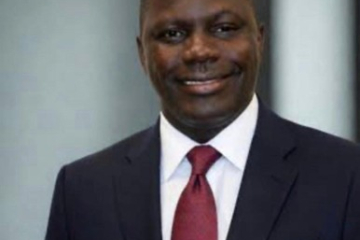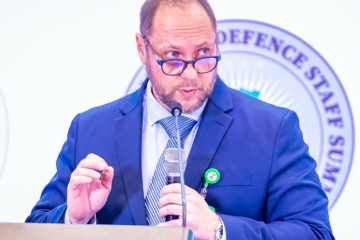
I was deeply inspired by the appearance of Hon. Ebrima Sillah, The Gambia’s Minister of Transport, Works and Infrastructure, on Coffee Time with Peter Gomez on Monday, 23 February 2026. His explanation of the mandate and ambitions of the Maritime Organization of West and Central Africa (MOWCA) was not only informative but highly uplifting. For once, Gambians were allowed to glimpse a future defined not by isolation and poverty, but by coordination, ambition, and collective strength.
First, I warmly congratulate Hon. Ebrima Sillah on his appointment as Chairman of the MOWCA Council of Ministers for the next two years. This honor does not belong to him alone. It belongs to The Gambia, and to every Gambian who still believes that our small nation can think big and act boldly on the continental stage.
What Minister Sillah described is nothing short of revolutionary, a maritime framework stretching from Senegal toward East Africa and, potentially, across the entire continent. If realized as envisioned, this initiative could unlock unprecedented economic opportunity. Jobs would multiply. Trade would surge. Tourism would flourish. Security cooperation would deepen. And, Africa’s seas, long exploited by others, would finally work for Africans.
Most striking was his reference to the deep-sea port to be constructed in Sanyang, The Gambia, a port that would rival any in the sub-region. Such a project is not just concrete and steel but hope in physical form. It is the promise that our children might inherit industries and skills.
For decades, Africa’s tragedy has been fragmentation. We have inherited borders that divide markets, laws that contradict one another, and security systems that stop at customs posts. We speak endlessly about sovereignty while our people drown in unemployment. We preach independence while our economies remain externally dependent. Harmonizing maritime security, transport systems, economic rules, and legal standards is not a luxury but a path out of permanent underdevelopment.
Yet even as I applaud MOWCA’s vision, I must raise a painful question: what of Africa’s interior? What of the Sahel? What of the landlocked states? A shining coastline cannot thrive if the hinterland is burning. The instability of Mali, Burkina Faso, Niger, and increasingly Nigeria is not a distant problem. It is a ticking time bomb for every port, every shipping lane, and every tourist beach.
Security cannot be built from the ocean inward alone. Trade cannot stop at the shoreline and development cannot end where the sand begins.
I recently proposed that Senegal and The Gambia jointly develop a modern transnational city stretching from The Gambia’s North Bank Region toward Kaolack, a pan-African laboratory for integration. Experts estimate such a project would take ten to fifteen years. It would contain deep-water ports from Barra toward the Atlantic, a world-class international airport, administrative centers, industrial zones, planned residential districts, universities, hospitals, drainage and sewage systems, highways, and interstate railway lines running eastward to Mali, Burkina Faso, and beyond.
This would not merely be a city. It would be a bridge, between sea and land, coast and interior, dream and reality. Goods would move faster and in greater volumes. Opportunities would spread beyond the narrow coastal strip where everything is now concentrated in congestion.
However, none of this is possible without genuine collaboration and collective protection. A continental or sub-regional security architecture with a unified command, reminiscent of NATO in structure if not in purpose, may be necessary to deter sabotage by armed groups often supported from outside Africa to obstruct nations seeking economic independence.
So long as African states cling jealously to colonial compartments, we will never generate the wealth needed to defeat extremism with employment. Jobless youth will remain easy recruits for those who weaponize religion, tribe, and regional grievance. Fragmentation will continue to masquerade as identity, while unity is dismissed as fantasy.
MOWCA, as described by Hon. Sillah, is a courageous step forward. It proves that African cooperation is possible. But it also exposes the deeper truth that maritime success alone will not save Africa. A prosperous coastline surrounded by a collapsing interior will only create islands of wealth in oceans of despair.
What Africa needs is a twin vision, sea and land, ports and railways, ships and cities, trade and security, bound together by a single political will. Talking about cooperation is easy. Implementing it across fractured geopolitical spaces is hard.
MOWCA can be the beginning of something historic. But for that history to matter, the sea must meet the land, and both must be defended by unity of purpose.
It needs structures, less borders and indeed permanent bridges.