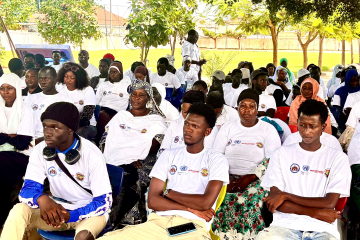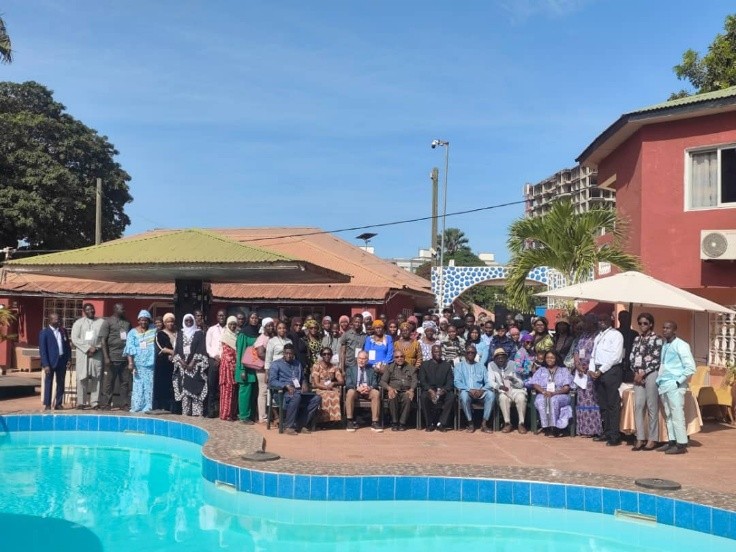
The forum was designed to enhance participants’ skills in ethical, culturally grounded, and genuinely collaborative community engagement.
The event was held on the theme: “Enhancing Community Engagement Research in The Gambia.”
Speaking at the event, James Gomez, director of Research at the Ministry of Higher Education, Research, Science and Technology (MoHERST), spoke of the mission of the Ministry, which is to build robust systems that ensure research not only advances knowledge but to meaningfully responds to the real needs, priorities and lived experiences communities.
He observed that community engagement is the foundation of ethical, impactful, and sustainable research systems, noting that in The Gambia, where community structures, social cohesion and trust remain strong, meaningful engagement is essential for ensuring that research is relevant respectful and responsive to the realities of the people it seeks to serve.
Phebian Ina Grant Sagnia, Research Consultant at CRAWAH noted that through presentations and case discussions, she was would to explore how to build trust, share power, promote inclusion, align research with community priorities, and sustain long-term partnerships.
She noted that community engagement is central to producing relevant and impactful research as it ensures voices of community members, especially the most vulnerable are heard, respected and reflected in the evidence they generate.
However, the forum offers an opportunity to share experiences, examine challenges, and identify strategies to deepen collaboration between researchers, civil society, and the communities we serve.
It is also a chance to empower young people to see themselves not only as beneficiaries but as contributors and future research leaders.
In his slide presentation, Professor Henry Silverman, University of Maryland Baltimore-USA, outlined that Community Engagement (CE) in Research is increasingly recognized as a critical component of global health research, and that CE occurs at various levels, from informing and consulting to co-designing programs and empowering community members to share authority in decision-making processes.
This Inclusive approach, he said, builds trust, strengthens relationships and promotes equitable power and resource distribution.
Highlighting on the research gap, he said, while previous approaches with community engagement has occurred in The Gambia, it has primarily involved informing and consulting with the community.
This landscape, he added, suggests an ongoing need for deeper and more integrated collaboration and aid that more research is needed to understand the barriers and challenges involved with CE in The Gambia such that CE could operate with improving health outcomes in The Gambia.