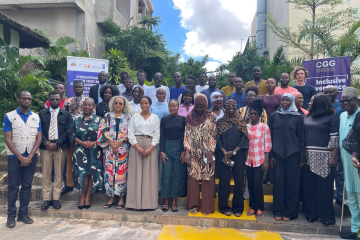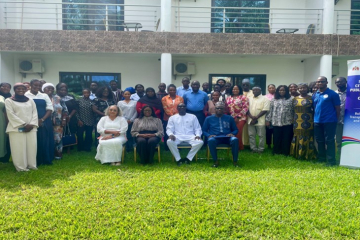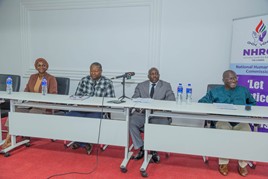
The convergence, held at the Metzy Residence, brought together policymakers, government institutions, civil society organisations and development partners tasked with implementing the country’s human rights commitments.
The session centred on the latest recommendations from treaty bodies overseeing the Convention on the Elimination of All Forms of Discrimination Against Women (CEDAW), the Convention on the Rights of the Child (CRC), the Convention on Enforced Disappearances, as well as those from the Universal Periodic Review (UPR) conducted in Geneva in January 2025.
The initiative seeks to ensure that duty bearers understand, internalise and translate these recommendations into actionable reforms aligned with national priorities and the Sustainable Development Goals (SDGs).
Opening the event, NHRC Chairperson Emmanuel Daniel Joof said the engagement was designed to close the persistent gap between ratifying human rights treaties and implementing them.
He noted that although The Gambia has made “significant strides” in strengthening its human rights architecture, meaningful progress depends on institutions fully understanding the obligations tied to the international instruments they have signed.
“The Gambia has ratified a wide range of treaties such as the Convention on the Rights of the Child, the UN Convention Against Torture and the Convention for the Protection of All Persons from Enforced Disappearance. These commitments affirm our collective duty as a nation to uphold dignity, equality and justice for all,” Joof said.
He stressed that ratification alone is not sufficient, adding that states must report periodically to UN treaty bodies, engage in constructive dialogue about progress and challenges, and demonstrate readiness to act on recommendations issued.
“Usually, these recommendations end up in files. Sometimes the state is not even fully aware of them, or they remain unimplemented. For these mechanisms to be meaningful, we must first know and understand the recommendations,” he added.
Joof explained that the two-day dialogue would unpack the concluding observations, discuss their implications for the national human rights agenda and identify practical ways for government, civil society and development partners to collaborate on implementation.
“Human rights protection requires a holistic approach. The NHRC cannot do it alone. Government also cannot do it alone. We need the active engagement of civil society, the media, women’s and children’s groups, and the wider community,” he stated.
Abdoulie Colley, Registrar General at the Ministry of Justice, described the gathering as “a significant milestone” in The Gambia’s pursuit of strengthened human rights protection.
He said recommendations from UN mechanisms serve as authoritative tools that help countries assess progress, identify gaps and align national laws and policies with global human rights standards.
“They are far more than formal outputs. They provide guidance, benchmarks and a roadmap for reforms. They reflect both what we have achieved and where renewed effort is required,” Colley stated.
Outlining the Ministry’s role, he said it involves three key responsibilities: facilitating coordination among institutions, ensuring legal reforms that comply with international obligations, and upholding transparency and accountability during implementation.
“The Ministry of Justice is committed to ensuring that these recommendations do not remain confined to reports. They must translate into meaningful improvements in governance, justice delivery and the protection of rights,” he affirmed.