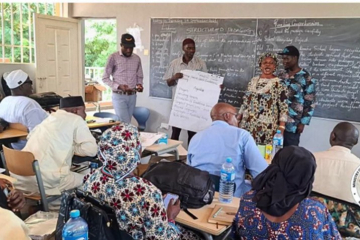
The initiative, titled ‘Promoting Sustainable and Inclusive Peace’ in The Gambia through the Holistic Empowerment of Women and Youth (JSB 2024 Project), is being implemented by the United Nations Development Programme (UNDP) with funding from the Government of Japan. It targets the West Coast and Lower River Regions, where economic vulnerability, youth unemployment and social instability remain pressing challenges.
The project is also designed to tackle inter-connected issues such as unemployment, irregular migration, substance abuse and social tension by improving livelihoods, strengthening resilience and increasing participation in peace and security initiatives.
It was designed in a way that it adopts a holistic and integrated approach, combining peace building, economic empowerment and youth engagement.
In addition, its overall objective is to promote sustainable and inclusive peace by empowering women and youth socially and economically. Its specific focus areas include strengthening participation in peace and security, enhancing livelihoods through agriculture and entrepreneurship, reducing vulnerability to drug abuse and promoting youth-led innovation and community resilience.
Similarly, key intervention areas include peace building and social cohesion through community dialogue and awareness campaigns, economic empowerment through climate-smart agriculture and agribusiness development, capacity building in food processing and enterprise development, and knowledge exchange through international collaboration, including youth exchange programmes between Japan and The Gambia.
Sanna Jallow, a representative from UNDP, described the project as both meaningful and timely, noting that it focuses on promoting not just peace but sustainable peace through a holistic approach that empowers women and youth.
He emphasised that the one-year project is fully funded by the people of Japan, whose support reflects their commitment to global development, Africa and The Gambia.
The project, he added, is built on evidence from a conflict development analysis and focuses on maintaining peace, creating livelihoods and addressing the issue of drug abuse among young people.
Jallow further highlighted that agriculture is central to the initiative, with efforts to reimaging the sector to make it more attractive to young people. He noted that over 1,700 young people submitted ideas under an innovation challenge, with 20 shortlisted and supported to refine their concepts, leading to winning solutions from both the Lower River and West Coast Regions.
He disclosed that they supported another 800 people with equipment to support their business and five were given money to support their businesses.
He said Japanese youth participants joined under the economic empowerment component, engaging with Gambian innovators to co-create solutions and exchange ideas, noting that both countries face challenges in youth participation in agriculture.
Also speaking, Yuka, a participant from Japan, said the Gambia experience highlighted the importance of community-driven solutions.
She noted that many of the most impactful ideas are built within communities themselves, saying fostering collaboration and listening to local voices, are key to creating meaningful and lasting change.
Other Japanese participants also shared their experiences, pointing to strong community engagement, innovation and the importance of sustaining partnerships beyond the project.