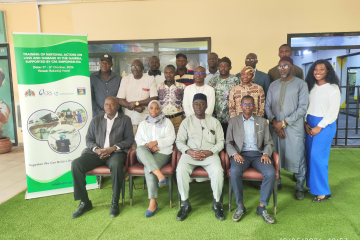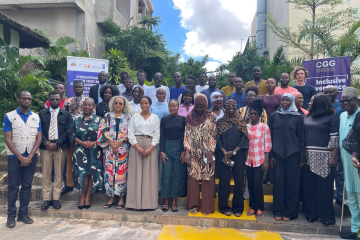
The official inaugural ceremony was held on Wednesday 11 March 2026 at the Ministry's Conference Hall in Kanifing.
The Ministry is undertaking a comprehensive review of the National Science, Technology, and Innovation Policy 2015-2025 to develop its successor, which will build on lessons learned, address emerging challenges and align with continental frameworks, including the African Union's Science, Technology and Innovation Agenda (STISA-2034).
This initiative is aimed at positioning The Gambia to leverage science, technology and innovation for sustainable socio-economic transformation.
The occasion also witnessed a detailed presentation on the NSTIP 2027-2035 and the TRG Terms of Reference Covers: (i) rationale and key lessons from the NSTIP 2015–2024 Summative Evaluation; (ii) policy architecture – 10 pillars, 84 KPIs, GERD financing trajectory, 6 technical annexes; (iii) TRG objective, composition, scope, 5 assessment criteria, working methods, deliverables and 8-week timeline.
In his keynote address, Minister Gomez revealed that the launch of the Policy 2027-2035 is not a routine administrative occasion.
"When this Ministry commissioned the Summative Evaluation of the NSTIP 2015–2024, we asked for honesty rather than flattery, and the findings were humbling," he said.
He further said none of the twelve core objectives was fully achieved, noting that the cause was structural as there was no enacted legal framework, no operational funding mechanism, nor national measurement system.
"Without law, coordination was informal. Without financing, the policy was a roadmap with no vehicle. Without measurement, we could not know whether we were advancing or standing still," he explained.
However, Prof Gomez stated that the same evaluation documented a decisive late-period turning point, explaining that between 2022 and 2025, something materially changed where the NRIF was enacted by the National Assembly; USET emerged as a Centre of Excellence supported by a USD 12 million World Bank investment; the UNiPOD Innovation Hub was established at USET by the UNDP.
He said the UN Technology Bank also entered a partnership with the Ministry and the UNDP Accelerator Lab has been active since 2019.
The NSTIP 2027-2035 starts from the strongest institutional foundation in Gambian STI history.
The NSTIP 2027-2035, he said, is organised around ten strategic pillars, as they begin with governance and law - the STI Bill 2027 (currently in draft stage) will give the system statutory authority for the first time.
"We follow with financing - the NRIF trajectory commits The Gambia to growing the Gross Domestic Expenditure on Research and Development (GERD) from 0.07% of GDP today to 0.5% by 2035, with annual NRIF disbursements reaching GMD 400 million," he said.
Beyond those foundations, he said, the policy addresses digital infrastructure, artificial intelligence and the digital economy, STEM human capital, gender equity, climate-technology, the national innovation ecosystem, open data and regional integration through ECOWAS, the African Union, and the UN Technology Bank.
This, he said, includes eighty-four Key Performance Indicators track performance across three levels, seven headline 2035 targets define success: 150 researchers per million inhabitants; 450 peer-reviewed publications annually; 40% fixed broadband penetration; 50% female researchers; 30 or more NRIF-supported patents; NRIF disbursements at 0.15% of GDP; and GERD at 0.5% of GDP.
The Minister urged members of the Technical Review Group to conduct a rigorous, independent assessment of the draft policy to ensure it is financially viable, legally coherent, and realistic within the Gambian context.
The Committee will review the draft over six to eight weeks and submit its recommendations to Cabinet for approval.