In recent weeks, videos of young people performing vehicle drifts on public roads have sparked public debate, with many citizens expressing concern over road safety, while others argue that drifting represents a passion for motorsport that should be properly developed.
A recent social media post showing what was described as the Gunjur Anti-Drifting Response Team preparing to confront a group known as the “Outlawz” attracted national attention. Although the confrontation did not happen, the discussion highlighted a bigger question: should drifting only be treated as a public safety concern, or can it be transformed into a structured sporting activity?
Road safety remains a major concern. Illegal drifting on public roads can result in accidents, injuries, property damage, traffic disruption and fear among communities. Authorities have a responsibility to enforce traffic regulations and protect road users.
However, supporters of motorsport argue that the problem is not drifting itself, but the lack of proper facilities, regulations and safety measures.
Globally, drifting has developed into a recognised motorsport, with countries such as Japan, South Africa, Kenya, Nigeria, the United Arab Emirates and the United States creating organised competitions that attract sponsorship, tourism and investment.
Unlike illegal street drifting, professional motorsport operates under strict rules, including designated venues, driver training, vehicle inspections, insurance and emergency response systems.
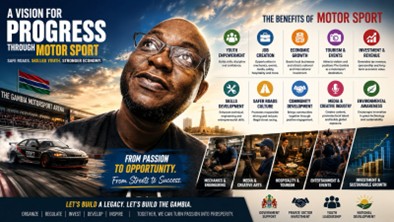
Proponents believe The Gambia could adopt a similar approach by establishing a national motorsport association, creating a dedicated racing facility and introducing training programmes that combine driving skills with mechanics, engineering and vehicle technology.
A regulated motorsport sector could create opportunities beyond drivers. Mechanics, welders, auto parts dealers, photographers, event organisers, hotels, restaurants and tourism operators could all benefit from organised competitions.
Private sector involvement could also play a key role through sponsorship from automotive companies, telecommunications firms, banks, insurance companies and energy brands.
For young drifting enthusiasts, the transition from street activity to professional sport would require responsibility. Participants would need to reject dangerous road drifting, respect traffic laws, establish organised clubs and work with authorities to build public confidence.
The current debate presents an opportunity for dialogue between government institutions, security authorities, youth groups, communities and private investors.
The objective, observers argue, should not be to encourage unsafe driving, but to create safe platforms where young talent can develop.
With proper regulation and investment, what is currently viewed as a public concern could become a new avenue for youth development, entrepreneurship and economic growth in The Gambia.