"Women's perspectives are critical for addressing issues like education, healthcare, socio-economic development and gender-based violence, which disproportionately affect them," she said.
According to her, leaving women behind in these decision making spaces has “compelling negative impacts on our development agendas, the achievements of our international commitments under international human rights instruments and the 2030 goals, especially SDGs 5 and 16.”
Additionally, to achieve these goals, it is imperative that national policies, programs and strategies are guided by key human right principles of dignity, equality and non-discrimination.
"We affirm that true progress cannot be achieved without women at the decision-making table. We affirm that women's full and effective participation in politics is a fundamental prerequisite for gender equality and genuine democracy," she explained.
The NHRC Vice Chair noted that Women's representation in decision-making roles is crucial for addressing the unique challenges they face. "It's not just about politics; it's about ensuring policies reflect the needs of Gambian women and girls".
She indicated that in having women in leadership, national policies and programs become more inclusive and effective.
Further, she added that it is time to recognise women's participation as a national development issue, not just a women's issue.
She reiterated that this is a great opportunity to usher in significant change in the 2026-2027 electoral cycle, coming together as key partners not just to highlight the persistent barriers, but most significantly put every aspect of the gaps and barriers into perspective and map out ways to collectively and effectively address the challenges affecting women in the Gambia.
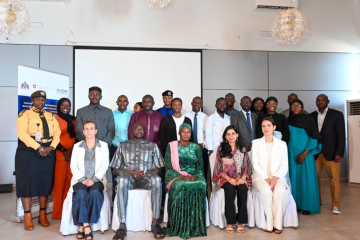
Tabu Njie Sarr, coordinator of the CSO Gender Platform, urged women to participate in politics. She's emphasised the importance of women's involvement in decision-making processes, highlighting the need for inclusive governance.
She said the CSO Gender Platform, under her coordination, is working to promote women's rights and empowerment in The Gambia, pushing for policies and laws that support women's participation in politics and decision-making roles.
Ms. Enya Braun, programme manager on Governance Cooperation at the European Union Delegation to The Gambia, said since 2016 The Gambia has very clearly and consistently chosen democracy. "How can a society be really democratic when more than half of the population is so bluntly unrepresented?" she quizzed.
She added that across the world, women make up half of humanity, yet their representation in decision making remains far from equal. She pointed out that globally only about 26 percent of parliamentarians are women and in Africa, the average is slightly lower.