Sanyang urged stronger intelligence sharing, coordinated cross‑border operations, investment in capacity building, and harmonised legal frameworks to deny criminals safe havens. “The security of one African state is inseparable from the security of all African states. Our responses must therefore be collective, coordinated and move beyond declarations into concrete action,” he emphasised.
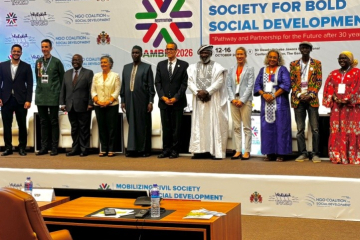
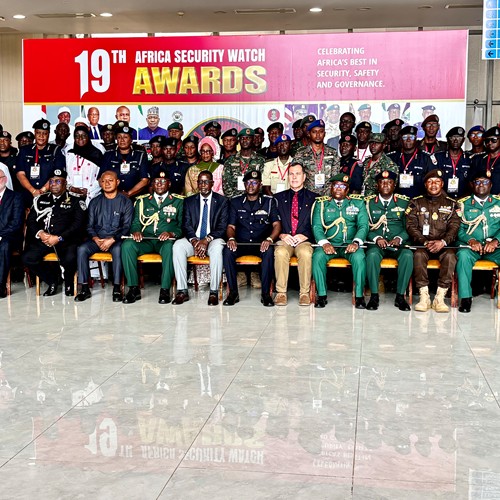
Minister Sanyang was speaking yesterday as security chiefs, policymakers, military officials and experts from across Africa converged at the OIC Conference Centre in Bijilo for the 19th African Security Watch Conference, a three‑day gathering aimed at strengthening continental cooperation against evolving threats.
Held under the theme “Dimensional Shift in the Geopolitics of Africa: Its Implications for Security and Development,” the conference brought together delegates from across the continent to examine Africa’s changing geopolitical landscape and its impact on peace, security and sustainable development.
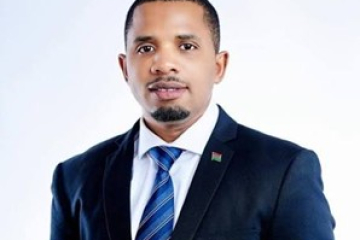
Delivering the keynote address on behalf of President Adama Barrow, Interior Minister Abdoulie Sanyang declared: “The Gambia may be small in size, but we are not peripheral to these dynamics. Our location on the Atlantic seaboard places us within reach of the instability affecting parts of the continent, and we have no illusion of immunity.”
He highlighted reforms since the country’s democratic transition in 2017, including one of Africa’s most comprehensive security sector reform programmes. These reforms, he said, aim to strengthen democratic governance, professionalism and civilian oversight of the security services. Among them is a new Immigration Bill to replace legislation dating back to 1965, alongside investments in integrated border management, digitalisation, and improved training and welfare for security officers.
Community policing, Sanyang stressed, remains central to the country’s security strategy: “The most valuable intelligence any police force possesses comes from communities that trust it.”
The minister warned that no African nation can confront today’s threats in isolation, citing terrorism, organised crime, human trafficking, cybercrime and violent extremism as dangers that transcend borders. He urged stronger intelligence sharing, coordinated cross‑border operations, investment in capacity building, modern technologies such as biometric identification, enhanced cybersecurity, and harmonised legal frameworks to deny criminals safe havens.
“The security of one African state is inseparable from the security of all African states,” he emphasised. “Our responses must therefore be collective, coordinated and move beyond declarations into concrete action.”
Representing Nigeria’s Inspector General of Police, Commissioner of Police Baba Mohammed Azare described the conference as a vital platform for practitioners and policymakers to exchange ideas. He outlined Nigeria’s reforms, including intelligence‑led policing, community engagement, technology‑driven operations, and respect for human rights. Nigeria, he noted, has expanded the use of digital intelligence systems, CCTV surveillance, forensic laboratories, drone technology and artificial intelligence‑supported crime analysis.
Azare stressed that security is a shared responsibility: “Internal security is the foundation upon which national development, democratic governance, economic prosperity and social stability are built. No nation can achieve sustainable development where insecurity persists.”
The three‑day conference is expected to produce practical recommendations to strengthen Africa’s collective security architecture, improve regional cooperation and enhance the continent’s capacity to respond to emerging geopolitical and security challenges while promoting sustainable development.