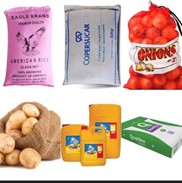
Ramadan is traditionally a season of compassion, charity and community. Families stock up on sugar, rice, cooking oil, onions and condiments to prepare meals for iftar the breaking of the fast at sunset. But this year, shoppers say even the most basic items are slipping beyond their reach.
“We all know that during the month of Ramadan families need sugar, rice and other condiments to prepare good meals after breaking their fast,” said Ablie Jallow, a businessman at Brikama Market. “But the prices are going up almost every week.”
According to Jallow, a 20-litre gallon of cooking oil that sold for D2,050 last week is now D2,100. A bag of onions that cost D1,200 two weeks ago is now D1,400. Armanti mayonnaise rose from D1,300 to D1,400, while spaghetti increased from D650 to D750.
In Mandinaba, Kombo East, a shopkeeper who requested anonymity said a bag of onions is now sold at D1,500, while a 20-litre gallon of cooking oil goes for as much as D2,250. A bag of sugar has climbed from D2,200 to D2,300.
“We have to add transportation cost and the higher exchange rate. If we don’t adjust the price, we make no profit,” the shopkeeper explained.
A significant portion of vegetables, onions, potatoes, cooking oil and other food items in Gambian markets are sourced from Senegal. Transactions are often conducted in CFA francs, meaning Gambian traders must convert dalasi into CFA before purchasing goods.
In recent months, traders say the CFA has strengthened relative to the dalasi, making imports more expensive. When the CFA rises, Gambian buyers pay more dalasi for the same quantity of goods - costs that are inevitably passed on to consumers.
Seedy Muhammed, a trader who regularly sources goods across the border, described the situation as “not in favour of consumers nor shopkeepers”.
“As Ramadan approaches, prices of onions, Irish potatoes and cooking oil have increased beyond expectations,” he said. “Even though the price of a 50kg bag of rice is still stable, we fear it may increase before the first day of Ramadan.”
Retailers say they are squeezed from both ends. Muhammed Jallow complained that wholesalers who supply them sometimes sell directly to consumers at lower retail prices, undercutting small shopkeepers.
“If we buy from wholesalers and then they turn around and sell at retail cheaper than us, how do we survive?” he asked.
Beyond exchange rates, traders cite transportation costs, border charges, storage losses and spoilage as additional pressures. One trader recalled that last Ramadan, some shopkeepers were forced to throw away rotten onions after failing to sell them at high prices.
“They increased the price too much, and people could not afford it. In the end, they lost everything,” he said.
For many households, however, explanations offer little comfort.
Aji Barry, a housewife in Abuko, accused some businesspeople of exploiting the festive period.
“Most businesspeople take advantage of the season to exploit others. Ramadan is about compassion and sharing, not hoarding goods and increasing prices,” she said.
Another resident called for stronger government intervention, including the introduction of price-control measures. She recalled that during the era of former President Yahya Jammeh, certain basic commodities were subject to price regulation.
“We are tired. Everything is expensive. Government needs to step in,” she said.
Many consumers argue that while businesses must make profits, morality should prevail during a sacred month.
“Ramadan should be a month of seeking Allah’s mercy and blessings, not a market-month where you slaughter your neighbours with high prices,” one trader along Tabokoto remarked, calling on fellow businesspeople to “fear Allah and help the needy.”
Shopkeeper Mansour in Abuko acknowledged that profit is the foundation of any business but insisted it should not justify what he termed “the stranglehold of exploitation.”
He urged authorities to intensify market monitoring and ensure that prices of staples such as rice, vegetable oil, flour, meat and fish remain within reach of ordinary Gambians.
As economic pressures mount globally, local consumers are increasingly vulnerable. With wages largely stagnant and unemployment still high, many families now face difficult choices reduce meal portions, buy on credit, or forgo certain items altogether during Ramadan.
Amid the safety concerns, the Food Safety and Quality Authority (FSQA) has announced it will intensify inspections of bakeries and street food vendors nationwide to ensure hygiene and food safety during the fasting month.
The Authority said bakeries that fail to meet minimum operating standards will be closed for improvement and compliance. Street food vendors have been urged to cover food items to protect them from dust and microbial contamination, particularly during the dry season.
“Our food inspectors will be going round the country and any uncovered food will be confiscated,” FSQA warned, adding that it stands ready to assist vendors in maintaining high hygiene standards.
As the crescent moon draws near, the rising cost of living is testing the resilience and solidarity of Gambian society. Traders argue they are victims of currency shifts and supply chain realities. Consumers insist that morality and fairness must guide market behaviour during Ramadan.
Between the pressure of the CFA and the burden on the dalasi, one thing is clear: for many Gambian families, preparing for Ramadan this year requires not only spiritual readiness, but financial endurance.
Whether through market self-regulation, government intervention, or communal goodwill, citizens say urgent action is needed to ensure that the holy month does not become a season of hardship for the very people it calls to uplift.