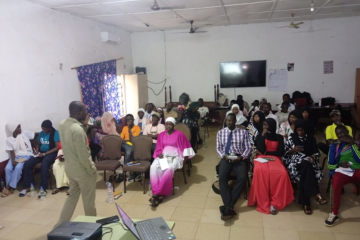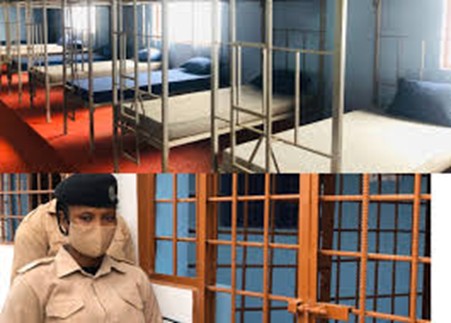
Hon. Cham and her team were received by the director and staff of the facility, who offered an initial briefing before leading the lawmakers on a tour of the sleeping quarters known as “the shells.” What they found was far from ideal. The facility currently houses thirty-four children, each with an individual bed, but the shells were originally designed for no more than twenty-five. The cramped conditions, the Committee noted, raise major concerns about hygiene, personal space, and the overall well-being of the juveniles.
Beyond overcrowding, the Committee observed that daily routines leave much to be desired. Breakfast is served at 7:30 a.m., but lunch and dinner are combined and given in the early afternoon. On Mondays, however, children wait until 5 p.m. for lunch, depending on resource availability. The juveniles are only allowed outside between 7:30 a.m. and 11:30 a.m., offering them a brief chance for fresh air and movement.
Family visitation remains allowed but inconsistent. Lawmakers were troubled to learn that several children go long periods without seeing any family members, not by choice but due to circumstances beyond their control; an absence that can deepen emotional and psychological strain.
One of the Committee’s strongest concerns centered on delay in justice. Many children, they learned, had not appeared in court for extended periods due to repeated adjournments. This means minors remain in custody longer than necessary, undermining the principle of timely justice. The lawmakers also raised the alarm that convicted juveniles and those on remand are still being kept together, a practice that poses safety, ethical, and legal concerns.
Education, often touted as a cornerstone of rehabilitation, presented a complicated picture. Only one child was attending school before their detention. While the facility now boasts a fully functional school offering Arabic, English, and vocational subjects - an achievement the Committee applauded - attendance remains low. According to the teacher, many children simply refuse to attend lessons, giving a range of excuses.
Previously, juveniles were allowed to attend schools outside the facility, but that arrangement has since been discontinued. Education is now fully in-house, which may be contributing to the lack of interest among some students.
Despite the challenges, the Committee commended the facility for the operational school, calling it a meaningful step toward rehabilitation. However, they emphasised the urgent need for more psychosocial support, better court access, strategies to decongest the shells, and stronger incentives to encourage schooling.
The Committee documented several persistent challenges, including inadequate resources, the absence of a vehicle for operations, irregular family visits, insufficient learning materials, and the troubling practice of housing children charged with various crimes together. Even vocational training is limited as the tailoring workshop operates with just a single sewing machine.
Hon. Cham stressed that while progress has been made, much more must be done to ensure that children in conflict with the law are treated with dignity, fairness, and a genuine chance at rehabilitation.