
The National Human Rights Commission (NHRC) has raised concerns over severe overcrowding, poor sanitation, inadequate healthcare and prolonged pre-trial detention in Gambian prisons, calling for urgent reforms to improve conditions and strengthen respect for human rights.
The concerns were highlighted in the Commission's 2025 Human Rights Monitoring Report on Prisons and Police Stations, launched for stakeholder discussion on Tuesday at Bakadaji Hotel, where security officials acknowledged the findings and pledged support.
The report followed monitoring visits in November 2025 to Mile II Central Prison, Jeshwang Prison, Janjanbureh Prison and selected police detention facilities. The exercise assessed detention conditions, treatment of detainees, access to healthcare, compliance with constitutional safeguards and protection of fundamental rights.
Among major concerns in prisons were deteriorating infrastructure, inadequate medical services, poor sanitation, weak record-keeping, limited rehabilitation opportunities, insufficient resources and inadequate protection for women and children in detention.
At police detention facilities, the Commission identified poor cell conditions, inadequate lighting and ventilation, insufficient food, limited access to legal representation and absence of child-friendly and gender-sensitive facilities.
It also raised concerns about overcrowding, improper separation of detainees, weak admission procedures and custody records, as well as detention beyond the legally prescribed 72-hour period.
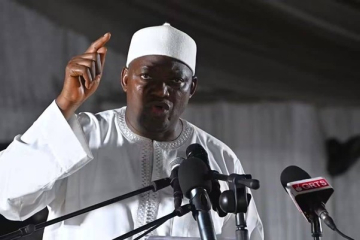
Speaking at the conference, Director General of the Gambia Prison Service, Ansumana Manneh, commended the NHRC and acknowledged the importance of its recommendations. He said the Prison Service was committed to acting on them and conducting effective follow-up.
Manneh reaffirmed the institution's commitment to respecting human rights and upholding human dignity.
Representing the Inspector General of Police, Ansumana Sanyang said the conference provided an opportunity for constructive engagement on challenges affecting police detention facilities. He welcomed the findings as useful for identifying gaps and improving police services.
He stressed that law enforcement must be guided not only by the responsibility to maintain law and order, but also by respect for fundamental rights and freedoms.
Deputy Permanent Secretary at the Ministry of Interior, Lamin Jatta, acknowledged systemic challenges, particularly overcrowding, and said the Ministry would continue engaging relevant institutions and oversight partners.
NHRC Commissioner Njundu Drammeh said the recommendations are intended to strengthen compliance with national laws and international standards, including the UN Standard Minimum Rules for the Treatment of Prisoners, known as the Nelson Mandela Rules, and the Convention Against Torture.
He emphasised that protecting the rights of people in detention requires collective responsibility and sustained institutional commitment.
The conference brought together government institutions, security agencies, justice sector actors, civil society and development partners to discuss the findings and develop an actionable roadmap for implementing the recommendations.