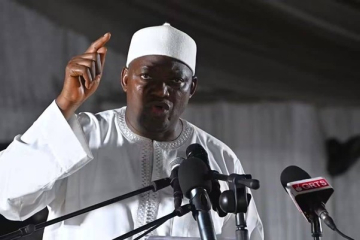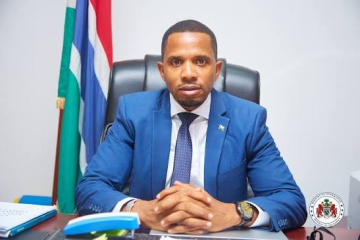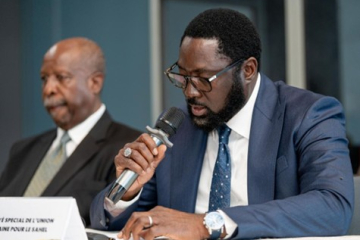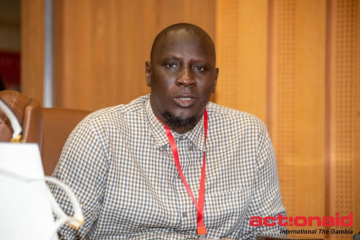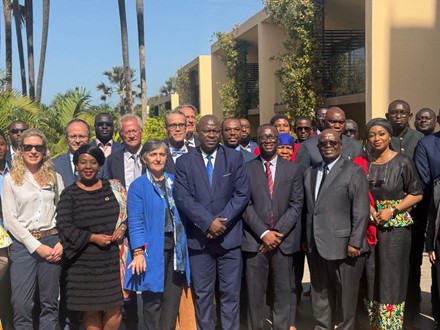
MOHERST minister was speaking during the officially opening of the High-Level Strategic Partners Breakfast Meeting with a compelling call for transformative partnerships to advance higher education and skills development in The Gambia, held at a local hotel in Kololi on Tuesday.
In his remarks, the minister highlighted The Gambia’s youthful population, with 64% under the age of 25, describing it as a critical demographic opportunity that requires urgent and strategic investment.
He underscored that challenges such as irregular migration, gender disparities in tertiary education, skills mismatch, and limited research infrastructure are not crises of ambition but gaps in opportunity that can be addressed through targeted interventions.
Presenting MoHERST’s evidence-based reform agenda, the minister outlined key data on low female participation in tertiary education and STEM fields, limited research output, and infrastructure constraints, while reaffirming Government commitment and initial World Bank support. He emphasised that the Ministry is now seeking strategic partnerships to accelerate impact, scale programmes, and ensure sustainability.
The statement set a strong tone for the meeting, positioning MoHERST as a ready and credible partner for impactful development cooperation.
He concluded by highlighting strong alignment with the SDGs and AU Agenda 2063, MoHERST’s readiness for implementation, and flexible partnership modalities. The minister called on partners to move beyond dialogue to concrete commitments, stressing that investing in education is an investment in stability, gender equality, innovation, and The Gambia’s future.
Seedy Keita, Minister for Finance and Economic Affairs, highlighted The Gambia's focus on harnessing its youthful population, with 64% under 24. He emphasised investing in higher education to leverage demographic dividends.
Keita noted the government's prioritisation of human capital, citing Singapore's example, where quality education drove economic success. He assured partners of The Gambia's sound macroeconomic management, with inflation at 6.6% and improving ratings.
The minister invited development partners to invest in The Gambia's human capital, emphasising it is the country's key resource .
Sering Modou Njie, Minister for Foreign Affairs and Gambians Aboard framed education as a diplomatic tool. He emphasised that investing in The Gambia's education system builds bridges, creates opportunities, and addresses root causes of migration.
Foreign Affairs minister Njie highlighted alignment between development partners’ priorities and The Gambia's programs, citing examples such as Clean energy and ICT initiatives, Women empowerment and innovation, Research partnerships and scholarships.
He offered support, streamlined procedures, a partnership unit, and public recognition for contributors. Njie encouraged partners to think beyond traditional development, focusing on lasting bonds and shared benefits.
Karl Paul Frederick, UN Resident Coordinator, emphasised education's role in accelerating The Gambia's development. He highlighted UN support for initiatives like Phase 2 programs, Female participation in STEM, University of Education transformation, Sustainable financing ecosystem.
Paul stressed partnership importance, citing needs for financing, expertise, and innovation. He encouraged co-financing, technical cooperation, and strategic partnerships to deliver results for The Gambia's youth and future generations.
The World Bank Country Manager, Franklin Mutahakana, highlighted higher education's role in The Gambia's economic transformation. As he explained key points of intervention, Current enrollment stands at 13.5%, with scope for expansion, Focus on adaptability, problem-solving, and tech-enabled skills.
He mentioned that the World Bank supports initiatives like University of Science, Engineering and Technology, Skills and Innovation Fund, Education management system strengthening, and emphasised on private sector engagement for job creation.
He assured the Bank aims to build on progress, supporting The Gambia's job creation and economic transformation goals.