In Berending, the minister and his delegation visited beneficiaries of ministry-supported initiatives, including Modou Jallow, a young farmer supported under the National Empowerment Development Initiative and the GIRAV Project. Jallow, a college graduate turned agripreneur, showcased his growing ventures in agriculture and animal husbandry, which are steadily creating employment and hope for other youths in his community. The visit highlighted how targeted support, when properly utilised, can transform lives at the grassroots.
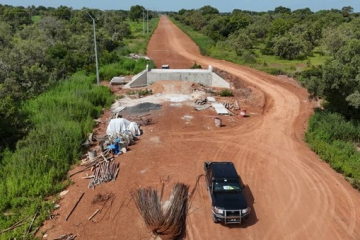
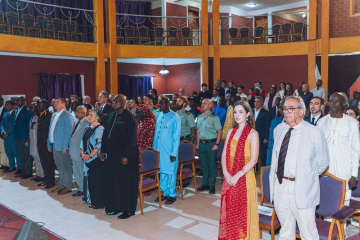
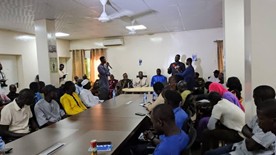
From Berending, the delegation proceeded to Nuimi Lamin, a site visit to a football field that should be fenced under a youth sports project worth D500,000, implemented through the Ministry of Youth and Sports. And a town hall meeting at the governor’s office in Kerewan which brought together young people, community leaders, security officials and sports stakeholders.
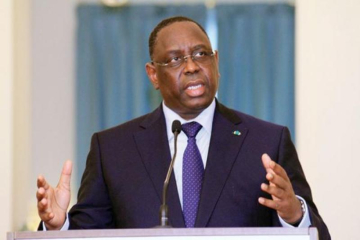
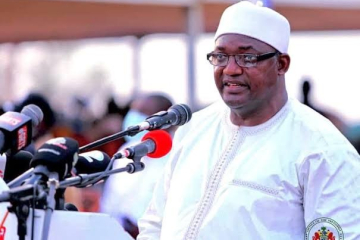
Speaking at the meeting, Minister Bakary Y. Badjie described the town hall meeting as highly significant for government. He said it provided a rare opportunity to listen directly to the challenges young people face in the region while also updating them on government interventions in youth development, sports, security and the fight against irregular migration.
“This is exactly why Cabinet directed us to go out and engage. We are here to hear from young people and also to explain what government is doing to transform lives, change the sports landscape and address issues like security and irregular migration.”
Reflecting on the engagement, the minister said two moments stood out for him. One was the testimony of a young welder who benefited from ministry’s support and has since grown his business to employ 15 people. The second was the strong and repeated demand for sports infrastructure.
“Anytime you talk about young people, you are talking about football,” he noted, adding that the high interest in sports places a responsibility on both government and the private sector to invest more in facilities and support systems.
Addressing young people directly, the minister urged them to maintain peace and channel grievances through dialogue rather than confrontation. He stressed that town hall meetings such as this are designed to prevent misunderstandings and street protests by creating platforms for open discussion.
On irregular migration, commonly referred to as the ‘backway’, the minister appealed to youths to be patient and rethink the risks involved. He warned that the expectations many young people have about life in Europe often do not match reality.
“We want our young people to look inwards and explore the opportunities here instead of risking their lives on journeys they don’t know how they will end,” he said.
He pointed to government investments in higher education and skills training, including the University of Science and Technology, the Tujereng Fishing Training Institute, and the skills centre in Wassu nearing completion. He also highlighted free programs under the National Youth Service Scheme, such as apprenticeship and graduate training initiatives.
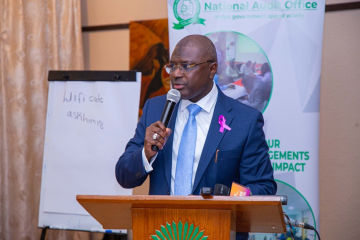
Deputy Governor Dembo Samateh emphasised patriotism and collaboration, calling on citizens to protect peace and development. He described the nationwide tour as a key transparency and accountability exercise that allows government to hear challenges first-hand.
Regional and district youth leaders also raised concerns. Fatoumatta Jammeh, Chairlady of Upper Badibou District, called for greater control of youth centres by regional youth committees and the renovation of youth offices.
Dembo Mbaye, District Youth Chair of Upper Nuimi, urged decentralisation and revitalisation of skills centres in rural Gambia to curb rural urban migration and ensure programs are implemented where they are most needed.
The tour, which will continue across other regions, seeks to collect these concerns and submit them to Cabinet for inclusion in the government’s broader development roadmap, reinforcing the message that dialogue, patience and local opportunities remain the safest path forward for Gambian youth.