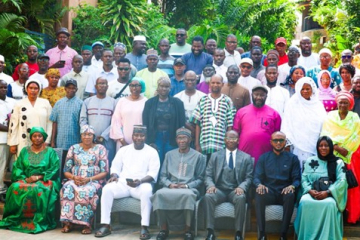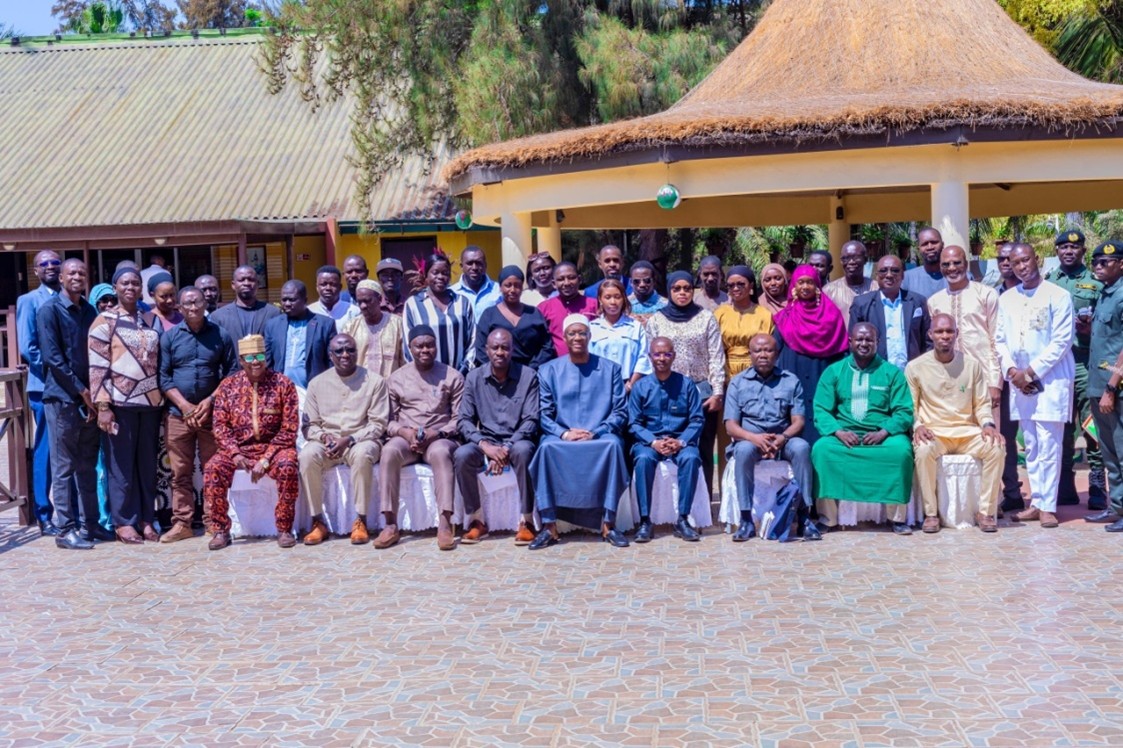
The initiative was brought to the forefront during a high-level media training and policy engagement organised in collaboration with the Network of Financial and Tax Reporters (NFTR), with financial support from the World Bank ITAS Project.
The synergy, which brought together more than 35 journalists, forms part of a broader strategy to strengthen public awareness and ensure accurate reporting on tax reforms and digitalisation efforts.
Delivering a keynote statement, Commissioner General Yankuba Darboe underscored the indispensable role of taxpayers and the media in driving economic and infrastructural development. He described journalists not only as taxpayers but as critical partners in information dissemination, whose understanding of tax systems is essential to national progress.
C-G Darboe emphasised that the introduction of ITAS represents a fundamental shift from traditional tax processes to a modern, technology-driven system.
“This system is not just an upgrade. It is a complete overhaul that will move our core services online,” he said, stressing the urgency for both tax administrators and taxpayers to adapt to the new digital environment.
He explained that ITAS is a secure, web-based platform designed to simplify tax processes and improve service delivery. Once fully operational, it will enable taxpayers to perform a wide range of functions remotely, including registering as taxpayers online, filing returns electronically at any time, making payments through secure digital channels, and processing refunds more efficiently.
These features, he noted, would significantly reduce the time, cost, and effort associated with tax compliance while enhancing transparency and accountability within the system.
However, Darboe was quick to point out that technology alone will not guarantee success.
“We are fully aware that the success of this system does not rest on the technology alone. It rests on the people who use it and those who communicate how it should be used,” he stated.
He called on journalists to take ownership of the reform process by educating the public and ensuring that taxpayers are well-informed, engaged, and confident in using the system.
“Your voice, your platforms, and your influence will be instrumental in ensuring that taxpayers across the country understand and embrace ITAS,” he added.
The Commissioner General further urged participants to view ITAS as a tool for enhancing fairness and efficiency in taxation, noting that effective implementation could transform the relationship between the state and taxpayers.
Also addressing the gathering, NFTR President Abdoulie Nyokeh described the training as a direct response to a request from journalists seeking deeper understanding of revenue laws and digital reforms.
He commended GRA’s leadership for facilitating the engagement, noting that it reflects a growing recognition of the media’s role in national development.
“I have no doubt that today’s engagement will be interactive and insightful, providing journalists with in-depth knowledge about the ITAS project and other reforms,” Nyokeh said.
He explained that the training aims to equip media practitioners with the skills and knowledge required to report accurately on taxation, business, and financial matters; areas that are often misunderstood by the public.
Nyokeh further highlighted that the forum forms part of a series of stakeholder engagements by GRA to broaden awareness of ITAS and other reforms introduced in recent years.
He stressed that strengthening collaboration between GRA and the media will ultimately promote transparency and improve public trust in the tax system.
Deputy Commissioner General Essa Jallow emphasised the importance of access to information in strengthening the social contract between citizens and the state.
“In every country, the profession you belong to is a noble one, because the social contract has no meaning if people lack access to information,” he stated.
Jallow reaffirmed GRA’s commitment to openness, noting that even beyond legal requirements, the institution remains dedicated to ensuring that citizens can access information freely.
He highlighted that ITAS is part of a broader modernisation agenda aimed at aligning The Gambia’s tax system with global best practices.
“In many countries, what we are currently doing manually is a thing of the past. This is why we must modernise to provide efficient services and reduce both administrative and compliance costs,” he explained.
According to him, the new system would allow taxpayers to access services from anywhere, eliminating long queues and reducing the need for physical visits to tax offices.
“With ITAS, you save time, reduce costs, and improve efficiency. It is truly a win-win for everyone,” he added.
Providing further insight, ITAS Project Manager Samba Sallah underscored the importance of early engagement with stakeholders, particularly the media.
He noted that journalists play a dual role as both taxpayers and communicators, making their involvement crucial to the success of the reform.
“The purpose of ITAS is to simplify tax administration for both the authority and taxpayers. While we have a system that works, there is a need for a better, more modern solution,” Sallah said.
He explained that the current system does not fully align with modern technological demands, which has necessitated the development of ITAS.
Importantly, he stressed that GRA is taking a proactive approach by engaging stakeholders before the system’s full rollout.
“We don’t want to wait until the system is completed before informing taxpayers. This is a system for all Gambians, and everyone must understand how it works,” he noted.
Also lending his voice, Lamin Cham commended GRA for its forward-thinking approach and encouraged journalists to take the training seriously.
He emphasised the critical role of taxation in national development, urging media practitioners to use their platforms to promote awareness and compliance.
The training sessions covered a wide range of topics, including GRA’s mandate, ongoing digital reforms, and the role of the media in educating the public on tax obligations.
Participants were actively engaged in discussions to seek clarifications to deepen their understanding of the ITAS system and broader fiscal issues.
The engagement also provided a rare opportunity for journalists to interact directly with GRA’s top management and technical experts, fostering open dialogue and collaboration.