Senghore told the court that one Ensa Keita told them that Manjang stabbed Samba Wurry and nearly beheading Kajali Sonko, before calmly washing his hands at a tap near the detention center in Kanilai village, Foni Kansala District of the West Coast Region.
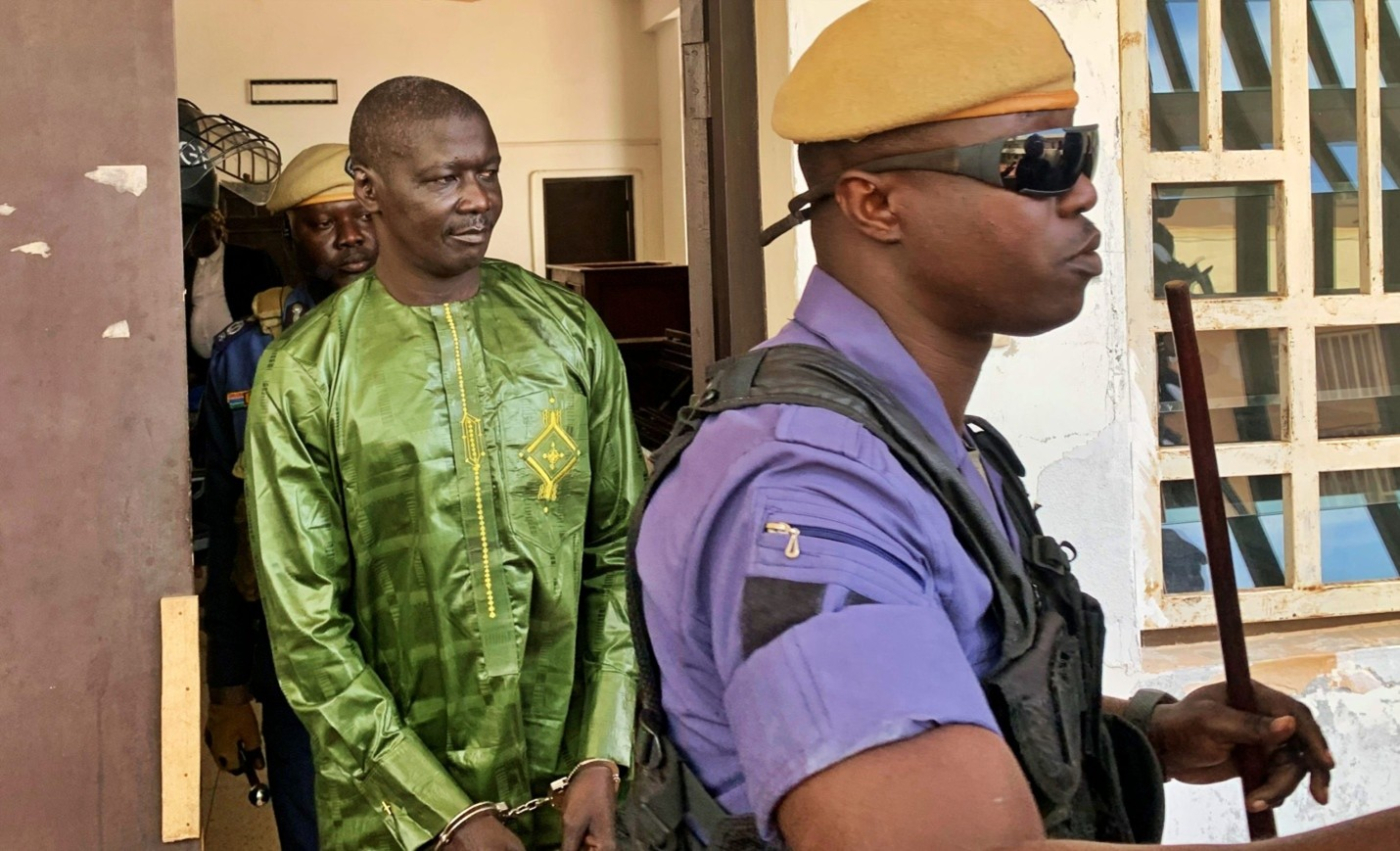
When the case was mentioned yesterday, E.R. Dougan represented the State, while S.K. Jobe appeared for the defence, Sanna Manjang.
Detective Jali M. Senghore, who served on a panel of investigators drawn from the Gambia Police Force (GPF), the Gambia Armed Forces (GAF), and the State Intelligence Service (SIS), recounted details obtained during their investigation and interrogation of key witness Ensa Keita.
“The accused person, Sanna Manjang, stabbed Samba Wurry and then nearly beheaded Kajali, before going to the tap to wash his hands,” Senghore testified.
“Ensa Keita told the panel that after killing the two men, Manjang warned him that he would be the next victim.”
On their visit to Kanilai, Detective Senghore explained that witness Ensa Keita had described how the killings occurred, beginning at the detention centre located only a few metres from where lions were kept. Senghore added: “Prior to our visit to Kanilai, the witness told us that the tap was directly opposite a window and close to a mango tree. Upon our arrival, we found that the mango tree was indeed in the same position as described. However, the tap had been shifted to the right side.”
When asked about the outcome of the panel’s work, Detective Senghore stated that following their investigation, a report was compiled based on the findings established during the course of the inquiry. He explained that as a result of those findings, the accused, Sanna Manjang, was subsequently cautioned and charged accordingly by deputy inspector Samba J. Sowe.
During cross‑examination, the witness was asked how many statements had been taken from the accused, Sanna Manjang. In reply, Detective Senghore stated that only one statement was obtained.
Pressing further, defence counsel Jobe challenged the witness: “How about if I told the court that you are not being truthful?” Senghore defended his testimony, responding: “I am truthful, my lord.”
Counsel Jobe continued: “I am putting it to you that you are not being truthful to the court regarding the number of statements taken from the accused person.” The witness maintained his position, insisting he was truthful.
Jobe then asked: “You will agree with me that more than one voluntary statement and cautionary statement was obtained from the accused person?” Senghore replied affirmatively.
Counsel Jobe pressed further: “Is it correct that when you visited Kanilai, the accused was not there?” The witness answered yes. Jobe continued: “Is it also correct that you never asked the accused person to accompany you to Kanilai?” Senghore again replied yes, but elaborated: “However, during our engagement, all the allegations were presented to him.”
Jobe then asserted: “You will confirm to the court that Kanilai does not have a detention centre.” Senghore disagreed, replying: “There is.”
Counsel Jobe asked: “It is correct that during your investigation you did not interview the GAF to establish who was in charge of the detention centre?” Senghore responded: “That is wrong.” When asked who was in charge, he explained: “I told you earlier that in the service, the most senior man is always in charge.”
Pressed on whether he interviewed any GAF official, Senghore confirmed: “Yes, we interviewed, but I cannot recall the first name. His surname is Badjie. I do not remember the rank of the soldier. It was an intelligence matter, and I cannot disclose that. I stand by that.”
Unsatisfied, Jobe argued: “My lord, I want you to compel the witness to disclose the name of the person, because he is a potential witness.” Senghore maintained his position: “My lord, I cannot disclose it.”
Counsel Jobe protested: “My lord, I am not satisfied with that.” However, the presiding judge ruled that he could not compel the witness to disclose intelligence sources.
Jobe then applied: “My lord, the witness is hiding behind intelligence. Therefore, we are making an application to compel the prosecution to provide us with the name of the soldier the witness claimed to have interviewed.”
Continuing his line of questioning, Jobe asked: “I am putting it to you that the two bedrooms and parlour were never used as a detention centre for anybody.” Senghore firmly responded: “The two bedrooms and parlour were indeed used as a detention centre.”
Jobe pressed further: “I am putting it to you that you have never seen Samba Wurry, you do not know his family, nor the village or town he came from, and you have never seen his dead body.” The witness replied: “Yes, that is correct.”
Counsel Jobe continued: “And equally, it is the same for Kajali Jammeh.” Senghore responded: “Yes.”
Jobe then asserted: “I am putting it to you that the names Samba Wurry and Kajali Jammeh are fictitious, as they never existed in person.” Senghore countered: “My lord, we know the names exist.”
Concluding his cross‑examination, Jobe asked who had led the panel investigating the matter. Senghore replied that he did not know who was leading the panel.
The case was the adjourned to Tuesday 24 February at 12 noon for the testimony of the second witness.