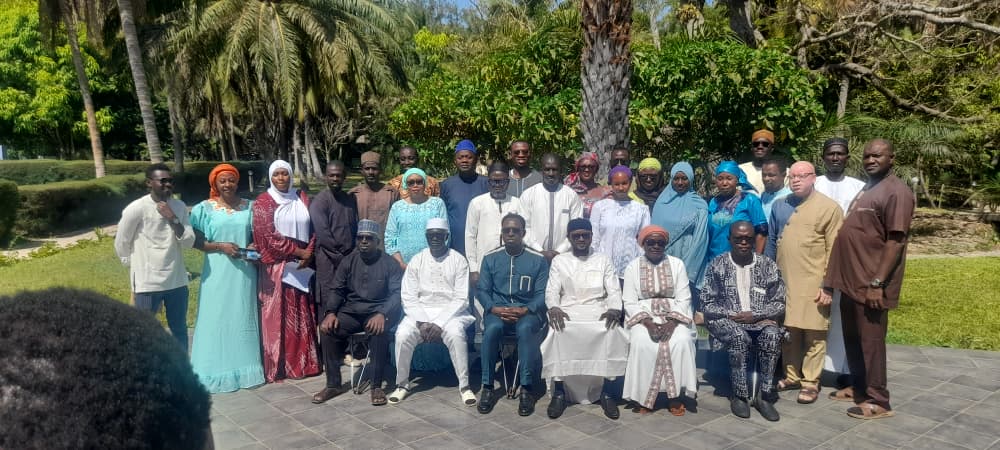
This knowledge-enhancement and skills-development intervention, seeks to provide not only conceptual understanding, but also practical application across the key stages of the procurement cycle.
During the course of the training, participants are expected to discuss procurement planning, specification development, selection methods, bid evaluation processes, contract management, and compliance monitoring amongst others.
Giving an overview of the training, Ibrahima Sanyang, director of Procurement, Policy and Operations at the GPPA, while describing the event as timely, reminded that the enactment of the GPPA Act 2022, complemented by the Public Procurement Regulations 2024, represents a significant advancement in strengthening the legal and institutional framework governing procurement.
Those reforms, he added, are part of a broader policy trajectory aimed at enhancing regulatory clarity, improving institutional accountability, and promoting efficiency, transparency, and value for money in the utilisation of public resources.
“From a technical and policy perspective, the reforms were introduced to address gaps in implementation, strengthen compliance, and align the national procurement system with international best practices. More importantly, they seek to reposition public procurement from a routine administrative function to a strategic tool for effective public financial management and national development.’’
Sanyang reminded that a key feature of these reforms is the standardisation of procurement processes through the introduction of Standard Bidding Documents, harmonised templates, updated procurement manuals, and structured forms.
Phoday M. Jaiteh, director general of the Gambia Public Procurement Authority, explained that they gathered to discuss a topic that is often overlooked but is arguably the most critical engine of government performance.
‘‘We all know the saying that government is a business; but, in the 21st Century, this is simply not true. Government must manage public funds with the same or even higher levels of efficiency, integrity and strategic foresight as the private sector.’’
Jaiteh revealed that a high percentage of our national budget is spent through public procurement processes.
Juldeh Ceesay, deputy permanent secretary Programmes, Procurement at the Ministry of Finance and Economic Affairs, reminded that public procurement is not merely an administrative function, rather it is a core pillar of public financial management and one of the most strategic instruments through which government policies are translated into tangible services, infrastructure and development outcome for the citizenry.
The efficiency, transparency and integrity of procurement systems, she believes, have a direct impact on fiscal discipline, budget, service delivery and ultimately public trust in government institutions.
To this end, DPS Ceesay reminded that MOFEA will continue to place high priority in strengthening the linkages between procurement system and broader public financial management frameworks.
In his opening address, Kalipha M.M. Mbye, reminded that as the National Assembly, they are constitutionally mandated to exercise oversight over the Executive’s management of public resources.
“However, the credibility and legitimacy of that oversight are inherently dependent on our own internal compliance. To demand accountability from others, we must first demonstrate an unwavering commitment to the highest standards of procedural integrity within our own Service. In this regard, we must lead by example.”
Adherence to the public procurement regulatory framework, he observed, is therefore not a matter of discretion; it is both a statutory obligation and an ethical imperative.
‘‘Our operations must be firmly anchored in the core principles of Value for Money, Transparency, and Equity. Every dalasi of public funds entrusted to the National Assembly must be managed through processes that are transparent, competitive, and beyond reproach.”