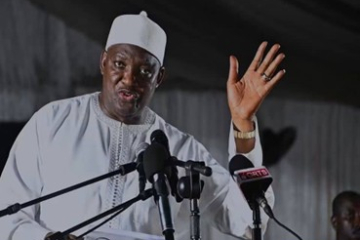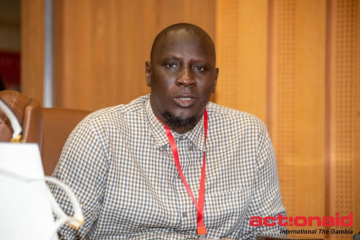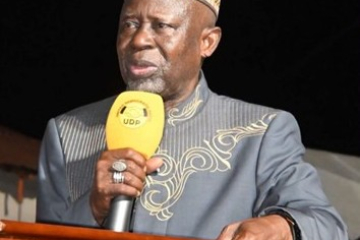
“The Americans are in the mix as far as national conversation is concerned, by virtue of the visa restrictions slapped on us,” Sankareh said.
He explained that the government, with the backing of the President’s Office and the Ministry of Foreign Affairs, will engage the U.S. government either through the American Embassy in Banjul or directly with the State Department.
According to Sankareh, the move is aimed at correcting what he described as an anomaly, especially given the long-standing diplomatic relationship between The Gambia and the United States dating back to independence.
He argued that the country’s democratic credentials under President Adama Barrow should count in efforts to reset relations. He recalled that during the 22 years before President Barrow came to power, the U.S. had serious concerns about governance in The Gambia, but said the situation has since changed.
Sankareh stressed that President Barrow is not merely making promises but is determined to find a diplomatic solution to the visa problem. “He will do everything within his power and mandate to make sure there is a fix,” he said.
Addressing concerns that The Gambia may partly be at fault, Sankareh pointed to two key issues often raised by U.S. authorities: Gambians overstaying their visas and the presence of undocumented migrants. However, he cautioned against what he called a superficial interpretation of a deeply complex reality.
Drawing from his own experience from living much of his life as an immigrant and exile, Sankareh explained that many Gambians in the United States entered legally but later became statusless after failing to secure asylum or regularise their stay.
He rejected the label illegal, noting that overstaying a visa is not the same as entering a country unlawfully.
He painted a picture of families who have lived in the U.S. for decades, with children born, raised and educated there. “To uproot a family established and consolidated in America is a very painful, very agonising experience,” he said, adding that many affected Gambians are law abiding, God-fearing people who have exhausted all legal options to change their status.
Sankareh said these human realities are among the factors the government must consider as it engages Washington. He suggested that creative solutions, including return packages for those willing to come home, could form part of broader discussions.
The spokesperson also confirmed reports that some Gambians with valid U.S. visas have recently been advised to delay travel. He said he had heard similar information and was seeking verification from the American Embassy, noting that even travellers holding valid visas had reportedly been asked to wait a while pending further clarification.
He described the situation as nightmarish but insisted that dialogue, not confrontation, remains the government’s chosen path as it seeks to restore confidence and normalcy for Gambians affected by the visa restrictions.