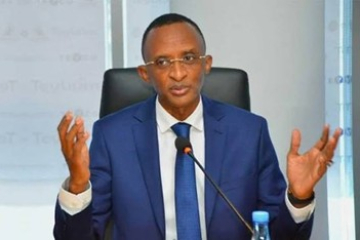
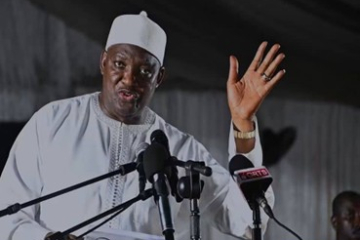
“This occasion is not mere procedural formality. It is an act of accountability and celebration of a journey that we all worked together,” said Ambassador Lang Yabo, Permanent Secretary at the Ministry of Foreign Affairs, International Cooperation and Gambians Abroad, as he officially opened the workshop. “We are forging our national story to show the world that migration, when managed humanely, is a powerful force for development, and not a crisis to be contained.”
The Gambia adopted the Global Compact for Migration in Marrakesh on 10 December 2018 and became a GCM Champion Country in March 2022. Wednesday’s report is the country’s second progress update and will feed into the International Migration Review Forum (IMRF) in New York.
Ambassador Yabou said the report reflects a “nation that is at once a country of origin, transit, and destination” and details successes in embedding migration in the National Development Plan, strengthening border governance, and expanding legal pathways for workers.
He also admitted “unfinished business”, citing the “persistent pull of irregular migration” and the need for enhanced international cooperation on returns and reintegration.
“Irregular migration must be addressed, but we cannot address it if we don’t look at the root causes,” Yabo told delegates. “That is the young people of this country.”
For the first time, the official report incorporates a civil society “shadow report” led by TANGO, the Association of Non-Governmental Organizations in The Gambia.
Yadicon Eribo, chairperson of TANGO, said broad-based consultations were held with CSOs nationwide to ensure “grassroots representative, community experience, and the voices of migrants themselves were reflected in the national discourse”.
The shadow report, she said, provided an “independent assessment of progress, identified key gaps and offers practical recommendations”. It calls for stronger protection mechanisms, better data systems, and expanded safe, regular pathways.
“While progress has been made, more work remains to be done,” Eribo said. “Migration policies must translate into tangible improvement in people’s lives.”
Sibgha Ajaz, Officer in Charge of IOM The Gambia, praised the country’s “holistic approach” and “whole-of-government, whole-of-society” process. She highlighted the National Coordination Mechanism and eight specialised working groups that improved interministerial coordination.
“The Gambia has shown leadership that is not just defined by size, but by vision, political commitment, and partnership,” Ajaz said, speaking also on behalf of the UN Country Team.
She noted that migration considerations are increasingly embedded in development planning, Diaspora engagement, remittance systems, and return frameworks. IOM reaffirmed its commitment to support “safe, orderly, and regular migration for the benefits of migrants, families, and communities alik
The validated report will form the basis of The Gambia’s engagement at the IMRF in New York.
“Better management of migration is in everybody’s interests,” she stated. “Let us give them a story of leadership and a story of hope.”
The GCM is the first comprehensive UN framework on migration. The Gambia’s first national report in 2022 marked its pledge as a Champion Country. The IMRF meets every four years to review progress.