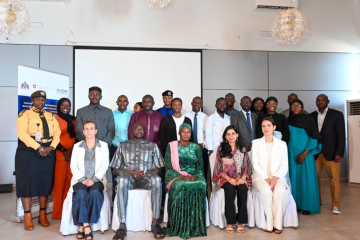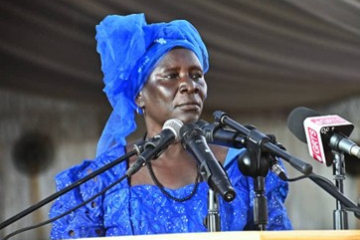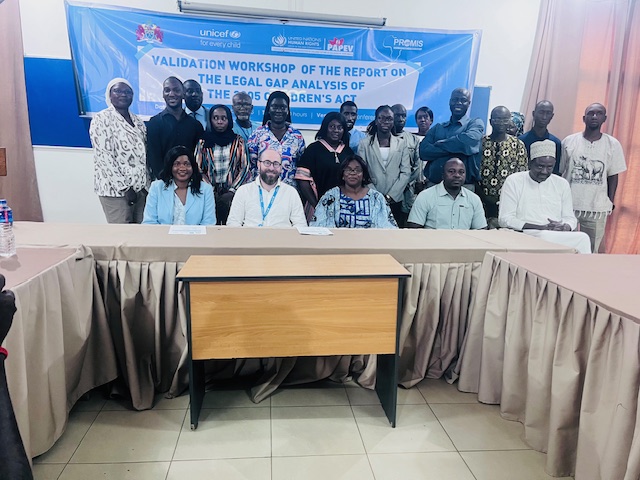
Regional Representative of OHCHR, Marie Adams, in her opening remarks mentioned that, the process reflects the country’s commitment to modernising its child protection framework in line with emerging challenges. “Today marks an important milestone in The Gambia’s journey to protect the rights and welfare of children,” she said.
She added that while the Children’s Act 2005 was a groundbreaking instrument when enacted, new threats such as child trafficking, online exploitation, dangerous migration routes and substance abuse demand updated legislation.
Child Protection Manager UNICEF, Emmanuel Michaud, highlighted the strong coordination among partners, describing the collaboration between the Ministry, UNICEF and OHCHR as “beyond financial support” and rooted in joint planning and commitment. He underscored the relevance of integrating recent recommendations from the UN Committee on the Rights of the Child, especially on issues such as digital safety, climate-related vulnerabilities and ending corporal punishment.
“The legal gap analysis, conducted by international consultant, Markus P.M. Angula, identifies shortcomings in the current law and provides recommendations to harmonise national legislation with international and regional child rights instruments, including the CRC, CEDAW, the CRPD and the African Charter on the Rights and Welfare of the Child,” he added.
Bintou Fatty, director of MGCSW delivered a statement on behalf of the Permanent Secretary. She reaffirmed the government’s commitment to leading the repeal and reform process with transparency and broad consultations. “The realities facing our children continue to evolve,” she said. “It is therefore imperative that our laws keep pace with the needs of our children and with global standards.”
She emphasised that the analysis highlights urgent gaps in areas such as child justice, child labour, children on the move, violence and exploitation, and coordination among institutions. The Ministry pledged to ensure that the findings guide the drafting of a stronger, inclusive and modern Children’s Bill.
Stakeholders were urged to continue supporting the reform process, with the Ministry noting that transforming laws into meaningful change requires collaboration among government institutions, communities, traditional and religious leaders, development partners and civil society groups.
The validation marks the final stage before the drafting of the new Children’s Act begins. Once completed, the draft law will move to wider consultations and later to the National Assembly for enactment.