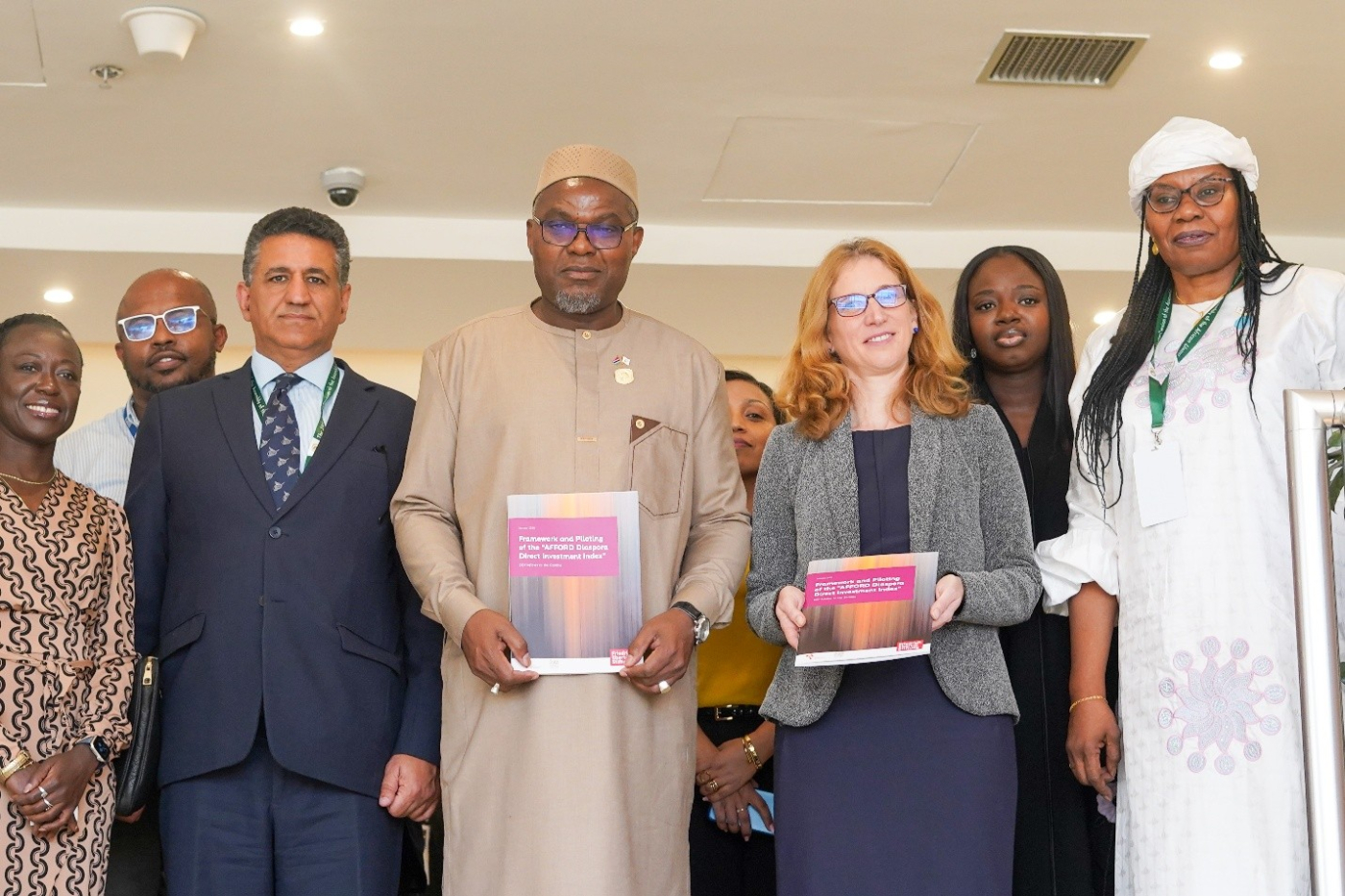
Developed in partnership with the African Foundation for Development (AFFORD) and the Friedrich Ebert Stiftung African Migration Policy Centre (FES AMPC), the index was piloted in The Gambia as the first country to implement the framework.
According to the pilot study, Diaspora Direct Investment inflows to The Gambia in 2024 were estimated at US$300.45 million, approximately 30 percent higher than Foreign Direct Investment (FDI) inflows of US$232.36 million recorded in the same year. The DDI figure represents about 40 percent of the country’s remittance inflows.
The Vice President announced that beginning next year, The Gambia plans to publish annual data on both remittances and DDI inflows, with the long-term goal of reporting on all five major types of diaspora finance: remittances, diaspora direct investment, diaspora portfolio investment, diaspora philanthropy and diaspora tourism.
The launch comes as The Gambia continues to receive recognition for its leadership in remittance data monitoring. On 10 January 2026, the country became one of the first globally to announce its 2025 remittance figures. According to the Central Bank of The Gambia, formal remittance inflows reached US$872.05 million in 2025 — equivalent to approximately 30 percent of national GDP — up from US$775.6 million in 2024 and US$737.12 million in 2023.
Vice President Jallow noted that following the country’s democratic transition in 2017 under President Adama Barrow, the diaspora was formally recognised as The Gambia’s “Eighth Region” and a key enabler of national development.
He emphasised that as Official Development Assistance declines and FDI fluctuates, African countries must increasingly harness diaspora finance, which has proven resilient and countercyclical.
The Gambia expressed hope that the AFFORD DDI Index would be replicated across Africa and become a standard analytical tool to support evidence-based development policymaking.