Led by the Central Bank of The Gambia and the Ministry of Communications and Digital Economy, with support from the Institute for Inclusive Digital Africa (IIDiA), and built on the Mojaloop technology, BANTABA 2.0 establishes, for the first time, a shared national backbone for inclusive instant payments. The launch places The Gambia among a growing group of African economies modernising payment systems to expand financial inclusion, reduce transaction costs, and deepen participation in the digital economy.
At its core, BANTABA 2.0 connects banks, mobile money operators, microfinance institutions, fintechs, and payment service providers through a single interoperable switch. Transactions are cleared and settled in real time, replacing delayed and fragmented processes that have historically constrained scale and efficiency within the payment’s ecosystem.
For consumers, BANTABA 2.0 switch enables instant transfers between bank accounts and mobile wallets, as well as faster merchant payments. For businesses, particularly small and medium sized enterprises, it improves cash flow management and reduces settlement risk. For the government, it provides core infrastructure to support salary payments, tax collection, and social transfers with greater efficiency, transparency, and traceability.
Unlike closed or proprietary payment networks, this switch is designed as shared national infrastructure. Participation is governed by common technical and operational standards, enabling competition and innovation at the service level rather than through exclusive platforms.
Mr. Hassan M. M. Jallow, Permanent Secretary at the Ministry of Communications and Digital Economy, described the launch as a strategic investment in national economic infrastructure.
“The establishment of a low cost, interoperable national switch could not have come at a more critical time,” he said. “It provides the backbone for affordable, instant, and secure digital payments across all financial service providers, from banks to mobile wallets and fintechs. This is foundational digital public infrastructure for economic transformation, not a standalone project.”
Expected to accelerate the shift away from cash, real time interoperability is set to expand the use of digital payments across the Gambian economy on a 24/7 basis. By lowering transaction costs and enabling instant settlement, BANTABA 2.0 reduces barriers for informal businesses and households that have traditionally operated outside the formal financial system.
By strengthening trust, efficiency, and traceability, the system supports broader financial inclusion and economic formalisation. Over time, policymakers expect these gains to translate into improved revenue mobilisation, greater access to finance, and more resilient payment flows across the economy.
From Capacity Building to National Infrastructure
The launch of BANTABA 2.0 follows more than a year of technical preparation and ecosystem coordination. Beginning in October 2024, the Institute for Inclusive Digital Africa (IIDiA), the Central Bank of The Gambiaand the Ministry of Communications and Digital Economy, with support from the Mojaloop Foundation, initiated a series of technical training workshops aimed at building local capacity to design, operate, and govern an interoperable payments platform, based on Mojaloop technology.
The programme equipped Gambian financial institutions with the operational readiness required to transition from concept to live national infrastructure.
The system goes live following a successful pilot involving multiple digital financial service providers, validating operational stability, security, and real-time processing capabilities. Additional institutions are expected to join as the platform scales, with full national adoption planned in subsequent phases.
BANTABA 2.0 deployment reflects close collaboration across the public and private sectors. The Central Bank provided regulatory leadership and oversight, while licensed banks, mobile money operators, and fintechs integrated their systems and participated in testing and live transactions.
Commenting on the launch, the Central Bank underscored the system’s role in strengthening financial stability and trust.
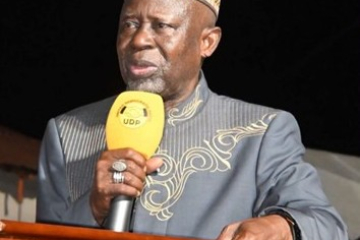
Speaking on behalf of the Honorable Governor, Central Bank of The Gambia, Mr. Buah Saidy, Dr. Paul Mendy, Second Deputy Governor of the Central Bank of The Gambia said “Interoperability and real time settlement are essential for a modern and resilient payments system”. He further noted that “BANTABA 2.0 improves efficiency while reinforcing regulatory oversight, risk management, and consumer protection.”
The platform is operated by Gamswitch, the national payment switch, ensuring domestic ownership and operational continuity. IIDiA supported coordination across stakeholders and helped align technical standards, governance arrangements, and long-term institutional capacity.
“This launch reflects a sustainable approach to payments reform,” said Niania Dabo, Director of Development and Partnerships at IIDiA. “Interoperability only works when institutions have the capacity, governance, and shared commitment to operate it as national infrastructure.”
Across Africa, governments are investing in real-time payment systems to support digital trade and reduce frictions in domestic and cross border transactions. By adopting an interoperable model based on Mojaloop technology, The Gambia aligns with global best practices and positions itself for future regional integration as payment standards converge.
For investors, policymakers, and financial institutions, BANTABA 2.0 signals The Gambia’s intent to anchor its digital economy in robust, shared financial infrastructure designed for scale, inclusion, and resilience.