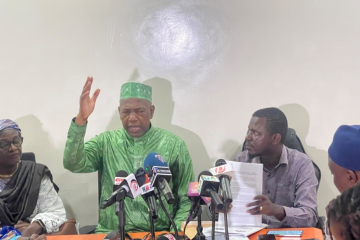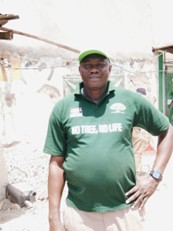
Although Forestry is often dismissed as a non-revenue generating entity, Mr Sabally emphasised that the department has established strict control mechanisms to regulate forest product harvesting.
Vendors of timber, firewood, charcoal, run palm, and other non-timber products are required to obtain annual licences, while transportation of forest products across regions is subject to royalties measured in cubic meters.
According to Mr Sabally, revenue is also collected through court fines for illegal activities, sales of confiscated products, and ecotourism fees at parks such as Bijilo. Officials note that these streams not only generate millions but also create employment and sustain livelihoods across the country.
He said that in 2024, forestry revenue stood at 8.1 million dalasis nationwide. By 2025, enforcement measures boosted collections to 25 million dalasis. "This year, the department has already recorded 10 million dalasis in the first quarter alone, with the West Coast region alone generating over D10 million in the first six months," he said.
Senior forestry leaders argue that the sector’s contribution to GDP has been unfairly rated at 0.0%, largely due to data gaps. They stress that forestry supports agriculture by maintaining rainfall patterns and soil fertility, while also driving economic activity through vendors, artisans, beekeepers, and private nurseries.
“The employment we are creating, the livelihoods we are sustaining, and the millions we are generating show that forestry is far from insignificant,” one official stated. “Our contribution is underestimated. Properly rated, forestry could account for more than 15% of GDP.”
He emphasised that with strengthened enforcement and growing awareness, the Forestry Department is determined to ensure that the sector’s economic and environmental importance is finally recognised.