A philosophy already expressed, now translated into texts:
“I want strong CEOs, strong ministers, a super-strong Prime Minister.” The statement made on April 4, 2025, set the tone; it has now become a governance framework. The explanatory report for the decree justifies this overhaul by the need to align the Prime Minister’s Office with the ambitions of a “sovereign, just, and prosperous Senegal” and with the standards of a modern, efficient, and better-equipped administration to implement the National Transformation Agenda. The text also emphasises the importance of addressing the limitations of the existing structure, deemed too fragile to support the new requirements for coordination and implementation.
A refocused, strengthened, and professionalised Prime Minister’s Office:
The Prime Minister’s Office is no longer limited to a coordinating role; it is becoming a true strategic centre. The new structure clarifies responsibilities, streamlines decision-making processes, and introduces rigorous internal controls. The strengthening of the leadership role is reflected, in particular, in the creation of a Deputy Chief of Staff position, designed to expedite the handling of priority issues and support the Prime Minister's work. The role of Government Spokesperson, entrusted to a Secretary of State directly attached to the Prime Minister's Office, gains in clarity and institutional coherence. Furthermore, all of the Cabinet's services are being restructured to enhance strategic output and improve the implementation of public policies.
Three Superstructures to Change Administrative Culture!
The reform introduces three key structural elements, designed as instruments of coherence, transparency, and performance. The Prime Minister's Office Inspectorate becomes an internal control entity whose mission is to audit the regularity of administrative and financial affairs, supervise the transfer of responsibilities, and monitor the implementation of directives. The Reform Guidance and Monitoring Unit establishes itself as the technical control centre responsible for ensuring inter-ministerial coherence and evaluating reforms. As for the Cabinet Preparation Unit, it professionalises the government chain by harmonising files, verifying texts, and guaranteeing the quality of documents submitted to the President.
The General Secretariat of the Government, a Redesigned Legal Backbone!
The strengthening of the General Secretariat of the Government constitutes another central pillar of the new system. The General Secretariat of the Government (SGG) has seen its prerogatives expanded: planning the legislative agenda, ensuring the compliance of regulatory acts, guaranteeing the legal soundness of decisions, and maintaining a permanent interface with republican institutions. This increased power aims to professionalise the legislative process and establish greater rigour in monitoring government commitments.
A deliberate break with the centralisation of power!
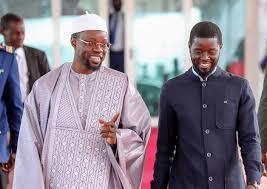
With this reform, Bassirou Diomaye Faye breaks with a tradition of concentrated presidential power and establishes a model based on shared responsibilities. The Prime Minister's office gains autonomy, resources, and operational coherence, allowing Ousmane Sonko to fully exercise his role as head of government. This new structure expresses a firm conviction: the effectiveness of the state does not depend on the centrality of a single individual, but on the robustness of its institutions and the clarity of its governance mechanisms.