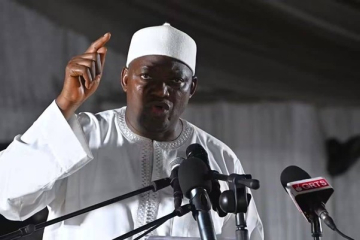
“If a chairman of a council as big as the West Coast Region says he will give every ward five million, then the assumption is that resources can be mobilised,” the minister argued. “Why wait until you come to power? Why not use that money now for waste management?”
He challenged the logic of postponing support for wards while garbage continues to pile up, asking why communities should wait years for promised funds when sanitation is an immediate public health concern. To him, the promise raised serious questions about priorities.
This debate was sparked by a message sent by an audience who described waste management as a serious issue the government had wholly failed to address. The contributor painted a picture of trash dumps across the West Coast Region, with garbage lining roadsides and forests in Brikama, Kabafita and Nyambai turned into what he called unofficial landfills.
He argued that while waste management falls mainly on councils, the central government must support enforcement, public sensitisation and infrastructure, including providing bins to households.
Dr. Ceesay said he was appalled by what he heard and disclosed that he immediately contacted the Minister for Environment upon receiving the message. He acknowledged the frustration of citizens but drew a firm line on responsibility.
“Waste collection and disposal is the job of the councils,” the minister stressed, adding that this function had been decentralised. “They have clearly failed in this aspect, and what we are seeing now proves it.”
While accepting that councils face capacity challenges, Dr. Ceesay rejected the idea that waste management is solely the responsibility of central government. He said councils are mandated to collect and dispose of waste and are accountable for the current state of affairs in many urban areas.
Dr. Ceesay also addressed claims that councils are being starved of funds by the central government. He explained that development contributions to councils are conditional and not automatically released. According to him, councils must meet specific requirements before funds can be disbursed.
“What I know is that these monies are not given just like that, if the conditions are not met, you cannot dispose them.”
Despite his criticism, the minister outlined government efforts to support a broader solution. He said waste management must go beyond collection and dumping, to include sorting, recycling and proper sanitary landfills. He spoke of plans to work with councils and the private sector through public-private partnerships, and mentioned support from private foundations in providing bins.
On enforcement, Dr. Ceesay admitted there are gaps, particularly within the courts, but said Cabinet has approved the recruitment of additional inspectors and environmental officers to strengthen oversight and fines for offenders.
“Banjul, Kanifing and the West Coast Region have failed in their mandate to keep their cities clean,” he said, contrasting them with councils in other regions where waste-related complaints are fewer.