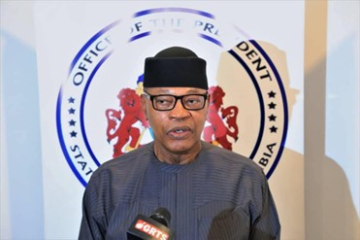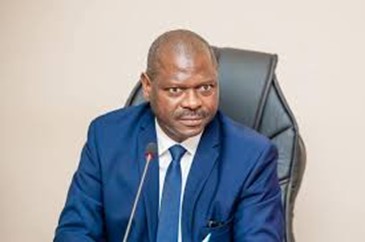
Responding, Minister Keita reminded the Assembly that since the implementation of the Economic Recovery Programme in 1986, the Gambia has operated a flexible exchange rate regime.
He explained that the Central Bank has recently taken several steps to stabilise the dalasi, including centralising currency shipments, issuing new regulations for foreign exchange bureaus, adopting a new electronic reporting platform for real-time monitoring, and reviewing FinTech guidelines focusing on liquidity and capital requirements.
When asked whether these measures would raise the value of the currency, the minister said currency behaves like any other traded security, fluctuating based on supply, demand, and market conditions. He added that while government can put strategies in place, the market ultimately determines the outcome.
Hon. Badjie further asked whether the Ministry did not care about the depreciation of the currency.
The Minister insisted that the implemented measures were themselves proof of government’s concern.
Questions then shifted to unregulated foreign exchange activities, particularly the thriving black market operations in places such as Westfield, Bamboo and Brikama. Hon. Badjie questioned how these bag-carrying operators could be monitored for accountability, suggesting that rules should be set to govern their activities.
The Minister agreed that the suggestion was valuable and assured the Assembly that the Central Bank would act on it.
The member pressed further, asking whether black market operations were impacting the dalasi.
The minister confirmed that they did, though the extent was difficult to quantify since the market was informal and outside regulation.
On another issue, the Member for Bakau, Hon. Assan Touray, asked about plans to sensitise Gambians regarding the ECOWAS shared currency expected to launch in 2027.
The Minister responded that the Central Bank of The Gambia had not begun public sensitisation due to uncertainty surrounding the launch date. He explained that ECOWAS institutions were expected to lead communication efforts collectively. WAMA, he added, had already approved a communication strategy under its 2025–2028 plan, including enhanced digital visibility and a dedicated communication officer. ECOWAS too, is working through stakeholder consultations and regional forums.
Hon. Touray then asked whether The Gambia had fulfilled its required obligations. The minister replied that the economic conditions required for convergence wax and wane, and that The Gambia had never met all four conditions at once, sometimes meeting two or three.
He also asked whether ECOWAS might still launch the currency even if some countries failed to meet the convergence criteria.
The minister explained that the 2027 date was set to give states time to meet the conditions, but assessments would be made as the date approached. Another member asked whether all countries needed to meet the target. The minister said he could not recall the criteria exactly but noted that at least 70% of member states must meet the requirements, adding that Nigeria alone makes up 60% of ECOWAS.