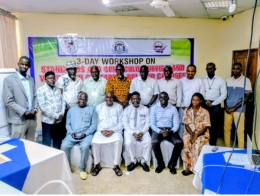
The workshop, which commenced on Thursday, August 27, 2026, at the National Accreditation and Quality Assurance Authority (NAQAA) Conference Hall at Kanifing Institutional Layout, brings together key stakeholders, curriculum developers and subject-matter experts from the maritime and TVET sectors.
The exercise seeks to review and validate draft national standards and curricula for marine-related courses, while providing stakeholders with an opportunity to contribute technical expertise to the development process.
The organisers said the initiative is also intended to ensure that the standards are nationally recognised, compliant with International Maritime Organization (IMO) requirements and responsive to the needs of the maritime industry and labour market.
Speaking at the opening ceremony, the Chairperson of the Crab Island TVET Foundation, Hon. Ousman Sillah, described the initiative as “historic”, noting that it represents the first collaboration of its scope between Crab Island, the Gambia Maritime Administration (GMA) and NAQAA to develop national standards and curricula for marine-related training.
He said the partnership would bring together regulation, education and industry expertise to shape the future of maritime training in The Gambia.
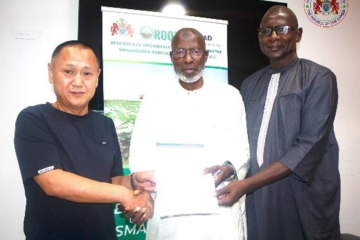
According to him, the initiative builds on a Memorandum of Understanding (MoU) signed six months ago, on February 27, 2026, between Crab Island TVET Foundation and GMA as part of a public-private partnership aimed at developing relevant skills for the maritime and blue economy sectors.
Mr Sillah explained that an Action Plan and Joint Implementation Committee (JIC) were subsequently established to guide the partnership. The committee has already conducted an inspection of the Crab Island TVET Centre to assess its facilities and identify areas requiring upgrades and equipment.
Chairperson Sillah also said the JIC is mandated to support programme development, regulatory alignment, trainer capacity building, facility upgrades, learner recruitment and certification, industry engagement and work-based learning.
Representing the Director General of GMA, Wandifa Saidy Leigh said maritime training was critical to The Gambia’s economic and social development, given the country’s dependence on port operations, coastal and inland water transport, fisheries, tourism and emerging blue economy activities.
He stressed the need for affordable and locally accessible maritime training that complies with international standards and enhances employment opportunities and career mobility for Gambians.
Leigh noted that increasing vessel traffic, port modernisation, digitalisation and the need for stronger environmental safeguards require updated skills and internationally aligned training.
He said the curriculum should adequately prepare trainees in areas including port operations and logistics, marine engineering and vessel maintenance, maritime safety and security, environmental protection, surveying, inspection and regulatory compliance, as well as emerging technologies and digital maritime systems.
Meanwhile, Alpha M.K. Lowe, representing NAQAA’s CEO, Dr Momodou Lamin Tarro, said the three-day workshop would provide an opportunity to critically examine the materials developed for the marine sector to determine their relevance, coherence and competency-based nature.
He said NAQAA’s technical leadership in the process would help ensure that the proposed standards and curricula meet the required quality and regulatory benchmarks.
Stakeholders are expected to use the three-day deliberations to refine the proposed standards and curricula and lay the foundation for a stronger, nationally recognised maritime training system capable of supporting The Gambia’s blue economy ambitions.